
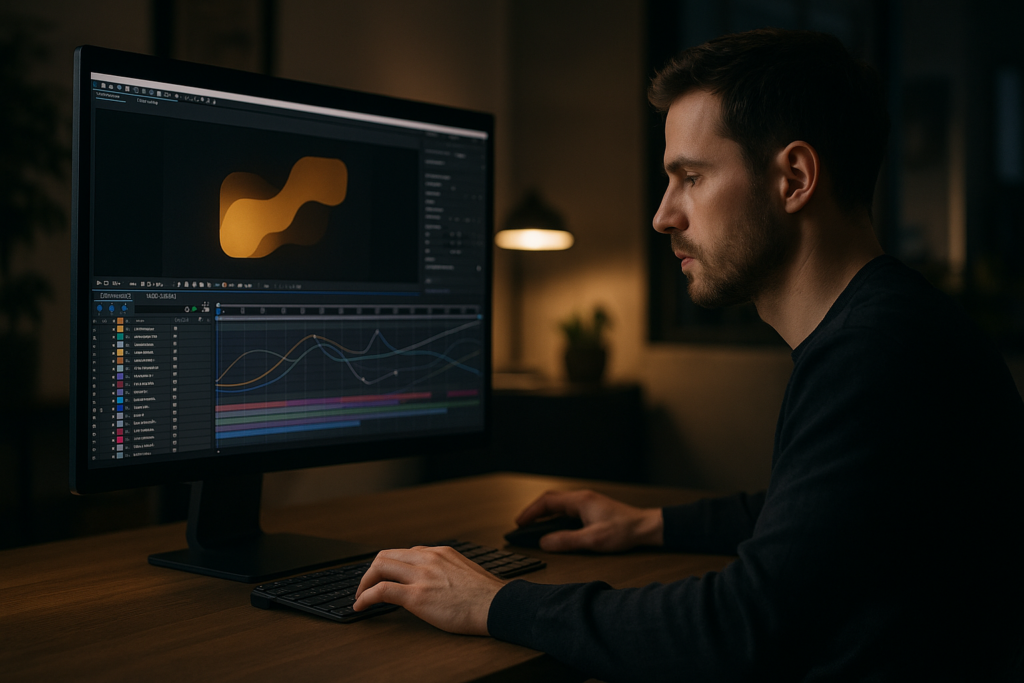
Making animation feel premium is not about throwing more effects at the screen. It is about control, restraint, and a workflow that respects every frame. Whether you are an editor, motion designer, or content creator, learning how to make animations look expensive will elevate everything you publish worldwide.Explore pro templates
📋 Table of Contents
What Makes Animation Look Expensive
When people talk about how to make animations look expensive, they rarely mean budget. They are describing a feeling: precise motion, confident pacing, and design that looks like it belongs in a high-end brand campaign.
Expensive-looking animation is usually defined by a few qualities:
- Clarity – every element has a reason to be on screen.
- Confidence – motion is smooth, timing is intentional, and there is no visual clutter.
- Consistency – typography, color, spacing, and animation style match across the whole piece.
- Craft – small details like easing, motion blur, and shadows are handled with care.
This matters for editors and creators because audiences subconsciously judge quality in seconds. A title animation that feels cheap can drag down an otherwise great video, while polished motion can make a low-budget shoot feel like a premium campaign.
If you work in Adobe After Effects, the good news is that “expensive” is less about owning the latest plugins and more about the decisions you make:
- How you set up your comps.
- How you handle keyframes and easing.
- How you structure your project so you can iterate quickly.
Whether you are cutting social ads, YouTube videos, or cinematic brand films, learning these fundamentals will help you pair solid storytelling with premium motion design tips that scale across every project.
Premium Motion Design Tips and Styles That Feel High End
Premium motion design tips usually focus less on tricks and more on taste. Once you understand what feels expensive on screen, you can choose the right style for each project and lean on templates as a starting point rather than a limitation.
Core premium styles
- Minimal luxury – clean layouts, lots of negative space, subtle motion. Great for tech, finance, and automotive work, similar to the polish you see in projects like the sleek storytelling of premium car widgets.
- Editorial kinetic type – bold typography, grid-based layouts, and controlled transitions, ideal for intros, trailers, and lyric-style videos.
- Product-driven microanimation – small, considered movements around UI, cards, and callouts that make the interface feel tangible.
- Cinematic title design – slow, deliberate typography with soft gradients, vignettes, and atmospheric motion.
Where premium templates shine
Not every project justifies custom design from scratch. Templates let you plug into proven premium styles quickly, especially when you need consistency across many deliverables.
- For YouTube intros and outros, a polished, reusable open helps maintain a high-end feel across your channel. You can study how pacing and motion are handled in works like the rhythmic storytelling of lyric-based edits.
- For UI or product explainers, using a structured system similar to a map or location widget layout keeps your animations grounded in a clear visual hierarchy.
- For app or fintech content, modular scenes like those in an animated digital card or finance demo show how to combine clean design with confident transitions.
Matching style to platform
- Reels and shorts – bold, punchy motion with fast cuts, but still controlled easing and typography.
- YouTube content – reusable design system for intros, lower thirds, and interstitials; look at modular layouts akin to a flexible video widget.
- Live sessions and calls – overlays, frames, and identifiers that echo the design logic of a polished meeting or stream layout.
The goal is to know what “premium” looks like for your audience, then choose templates and techniques that support that style instead of fighting it.
Common Mistakes That Make Animations Look Cheap
Understanding what breaks the illusion of quality is as important as knowing how to make animations look expensive. Many issues come from rushed setups and messy timelines rather than technical limitations.
Checklist of frequent mistakes
- Inconsistent timing
- Cuts and transitions that do not follow the music or voiceover.
- Keyframes spaced randomly, giving a jittery or hesitant feel.
- No easing or bad easing
- Linear keyframes everywhere, making motion feel robotic.
- Overusing extreme curves in the Graph Editor, causing awkward overshoots.
- Misused motion blur
- Motion blur disabled, so fast moves feel harsh and fake.
- Motion blur enabled on everything, including subtle elements, creating smears and muddy visuals.
- Messy compositions
- Layers not grouped or precomposed logically.
- Random naming, so revising a project becomes painful.
- Heavy, unnecessary plugins
- Using complex plugin-based effects where basic shape layers and masks would do.
- Relying on presets that do not match the project’s typography or color system.
- Bad precomp habits
- Precomps with mismatched frame rates or resolutions.
- Precomps nested too deeply, making it hard to adjust simple timing or copy animations.
Consequences for your final render
- Animations feel unpolished or “templatey” in a bad way.
- Revision cycles take much longer because nothing is organized.
- Export times balloon due to unnecessary layers and effects.
- Clients or viewers sense that something is off, even if they cannot explain why.
How to avoid these pitfalls
- Plan timing on a scratch track or markers before animating.
- Use the Graph Editor deliberately: ease in, ease out, and subtle arcs instead of extreme curves.
- Turn on motion blur only where speed justifies it.
- Adopt clear naming and color-label systems for your layers.
- Precompose to group ideas: typography, backgrounds, transitions, and overlays each in their own logical spaces.
The more disciplined your setup, the easier it becomes to apply premium motion design tips later without rebuilding the entire project.
Choosing the Right High End Approach for Each Project
Every platform and format demands a different definition of “expensive.” A cinematic brand film, a YouTube intro, and a social ad cannot all share the same pacing or density. Smart decision-making up front ensures your premium touches actually fit the medium.
Social reels and shorts
- Front-load impact in the first 1–2 seconds.
- Use bold type, quick reveals, and clear callouts.
- Keep transitions snappy but let key moments breathe.
Paid ads and product spots
- Clarify hierarchy: product, benefit, CTA.
- Use smooth, camera-like moves on UI or product cards.
- Reserve complex transitions for key beats instead of every cut.
YouTube channels and content series
- Design a small system of reusable intros, lower thirds, and end screens.
- Ensure your motion language matches your content tone: educational, cinematic, playful, or corporate.
- Study award-winning digital experiences on curated design galleries to understand how subtle motion reinforces brand storytelling.
Cinematic and brand films
- Focus on restrained typography and grading; let the footage breathe.
- Use delicate transitions, glows, and particles sparingly for emphasis.
- Maintain consistent aspect ratios, framing rules, and type scales.
When templates and subscriptions make sense
For editors delivering recurring content or multi-format campaigns, an Unlimited After Effects Templates Subscription can act as your design backbone. Instead of rebuilding transitions and titles every time, you:
- Start from a high-quality base that already looks premium.
- Swap content while preserving consistent motion language.
- Stay agile when clients request extra formats or new aspect ratios.
As you refine your library, you can test which designs hold up best across platforms by dropping them into different edits, as you might when reusing modular segments akin to the flexible segments in dual-screen edits. Then you standardize on the ones that consistently feel high end.
Practical Template and Workflow Guide for Expensive Looking Animation
Once you have a clear style in mind, the next step is building a reliable workflow that lets you apply it quickly. Think like an editor: structure first, details second. Templates become powerful when you treat them as systems, not one-off effects.
Project and version setup
- Decide your master resolution (1080p, 4K, or vertical) and frame rate before anything else.
- Keep a clean folder structure: 01 Assets, 02 Precomps, 03 Main Comps, 04 Renders.
- Duplicate template projects for each client or series, so you always have an untouched base file.
After Effects compatibility checks
- Confirm the minimum After Effects version required by any template.
- Match project color settings and working space to your typical delivery environment.
- Align fps with your edit timeline to avoid stutter: 23.976, 24, 25, or 30 fps as needed.
Keyframe organization and precomps
- Group related motion into precomps: titles, backgrounds, overlays, and transitions each in their own comp.
- Name key animation layers clearly: Title_Main_IN, Title_Main_OUT, BG_Gradient, etc.
- Use markers on layers to indicate key beats or timing cues.
Performance and preview tips
- Lower preview resolution to Half or Third while working.
- Solo only the layers you need to judge timing.
- Use region of interest to preview a small portion of the frame.
- Regularly purge cache if you notice sluggish previews.
Plugin dependencies and safe alternatives
- Before committing to a template, check if it uses paid plugins.
- Where possible, prefer templates that rely on shape layers, expressions, and native effects.
- If plugins are required, keep a list of which machines have licenses to avoid broken renders in a team environment.
Customization workflow
Approach customization in passes, not all at once:
- Pass 1 – Structure
- Replace placeholder text, logos, and media.
- Check that lengths match your voiceover or music beats.
- Pass 2 – Design
- Apply your color palette to global controls or adjustment layers.
- Align typography to your brand guidelines: font pairings, sizes, and tracking.
- Pass 3 – Motion
- Refine easing curves to match the project energy.
- Fine-tune delays and offsets between elements.
- Pass 4 – Polish
- Dial in motion blur, depth, glows, and subtle grain.
- Check edge cases in all scenes: long titles, multiple lines, or language changes.
Use cases and how to approach them
- Reels and shorts
- Favor templates with vertical setups and punchy transitions.
- Cut aggressively; remove anything that delays the main hook.
- Product promos
- Use templates that emphasize close-ups, cards, and simple UI storytelling.
- Anchor motion to the product: zooms, parallax, and callouts should all lead back to it.
- Cinematic edits
- Choose templates with restrained typography and atmospheric overlays.
- Let footage dominate; type and graphics support rather than compete.
Quality control before export
- Scrub slowly through transitions and check for popping elements or awkward easing.
- Toggle guides or safe areas to ensure type is not too close to the edges.
- Render low-res test exports to check pacing in the actual viewing context (phone, desktop, or TV).
By treating templates as part of a larger workflow, you keep your projects fast to edit while still achieving a polished, expensive feel.
Advanced Techniques and Long Term Workflow Optimization
Once your basic workflow is stable, you can focus on building systems that keep every project consistently premium. This is where reuse, modularity, and export discipline pay off.
Building reusable animation systems
- Create a small library of core moves: slide-ins, fades, scales, and wipes that match your brand personality.
- Turn these into reusable precomps or essential graphics-style setups for rapid deployment.
- Document timing rules so anyone on your team can match the style.
Styleframes and look development
- Before animating, lock in 2–4 key frames that show your main scenes.
- Decide typography hierarchy, color distribution, and background treatments here.
- Share styleframes with clients or collaborators to avoid late-stage design overhauls.
Modular transitions across a whole edit
- Build transitions as standalone comps that can live between any two scenes.
- Use universal controllers (e.g., one control layer for color and direction).
- Keep them short; expensive-looking edits rarely drag transitions out.
Keeping projects lightweight
- Regularly delete unused solids, precomps, and imported assets.
- Use pre-rendered elements where complex effects would slow the timeline.
- Store image sequences or high-res textures externally if they are only needed occasionally.
Export and render discipline
- Set a standard output format for review (H.264) and final master (e.g., ProRes or high-bitrate intermediate).
- Use the Render Queue or Media Encoder presets so exports are consistent across editors.
- Render small segments when testing heavy scenes instead of full timelines.
Working with other tools and dynamic linking
- Use dynamic linking sparingly; too many linked comps can slow both Premiere and After Effects.
- Pre-render locked segments and drop them into your edit as video files.
- When updating animations for recurring series, keep a master design project separate from client-specific versions.
Consistency across formats and campaigns
- Maintain a single source of truth for your motion system: color values, text styles, spacing, and animation curves.
- Use the same core system across campaigns, adjusting only complexity and density to suit the brief.
- Review previous high-performing pieces, such as polished showcases in curated sections like video template libraries, to benchmark against your own work.
Over time, these systems turn one-off “premium” results into a predictable standard you can hit for every client and every piece of content.
Search Intent and Quick Answers Around Premium Animation
People exploring how to make animations look expensive often search for practical, bite-sized answers. Addressing these quickly can guide your own learning roadmap.
- How do I make my text animation look more professional?
Use consistent easing, align type to a grid, and avoid too many different entry effects. One or two refined motions feel richer than many competing ones. - What is the easiest way to get premium motion design without starting from scratch?
Use high-quality After Effects templates that match your niche, then customize colors, fonts, and timing to your brand. - How much animation is too much in a corporate video?
If motion distracts from the message or makes slides hard to read, it is too much. Aim for subtle transitions and focus highlights only on key moments. - Do I need expensive plugins to get high end results?
No. Clean typography, thoughtful color, and well-tuned easing go further than any plugin. Native tools in After Effects are enough to achieve a polished look. - How can editors with little design experience still get premium results?
Rely on well-structured templates, follow a grid, and keep your palette simple. Limit yourself to one primary font family and a small set of animations. - What frame rate looks most cinematic?
24 fps is standard for a cinematic feel, but match the project’s existing footage and platform conventions when possible. - How do I keep multiple episodes or videos visually consistent?
Use the same intro, lower thirds, color palette, and transition set. Save them in a central toolkit project and reuse across all episodes.
As you answer these kinds of questions in your own workflow, you develop instincts that naturally lead to more expensive-looking motion.
Bringing It All Together for Premium Looking Motion
Expensive-looking animation is the result of many small choices done well: clean setups, thoughtful timing, disciplined use of effects, and a repeatable workflow. You started by understanding what premium means for your audience, then built systems to deliver that look consistently.
From fundamental easing and motion blur decisions to advanced modular transitions, every step supports clearer storytelling and higher perceived quality. Templates, especially within an Unlimited After Effects Templates Subscription, become your toolkit for scaling that quality across campaigns, formats, and clients worldwide without sacrificing craft.
Keep refining your eye, iterating on a small set of trusted animations, and reviewing your work against the best references you can find. With each project, your timeline will feel cleaner, your motion more confident, and your results closer to the high-end work you admire.
Conclusions
Premium animation is not a single trick; it is a repeatable mindset. With smart templates, disciplined setups, and careful timing, any editor or creator can achieve work that feels high end, consistent, and client ready on every project.
FAQ
What makes an animation look expensive in After Effects?
Controlled timing, consistent design, subtle motion blur, and clean typography matter most. Tasteful restraint usually feels more premium than complexity.
Do I need advanced plugins for premium motion design?
No. Native shape layers, masks, and the Graph Editor are enough to create high-end results when combined with strong design choices and clear hierarchy.
How can editors with limited design skills improve their motion?
Use well-crafted templates, stick to simple grids and palettes, and focus on easing and timing. Small, consistent improvements across projects add up quickly.
What frame rate should I use for high end animations?
Use the frame rate of your main footage or platform, often 24 fps for cinematic pieces and 25 or 30 fps for broadcast, social, and many online videos.
How do I keep long projects organized in After Effects?
Use clear folder structures, descriptive layer names, logical precomps, and consistent color labels. Organized projects are faster to refine and look more polished.
Can templates still look unique and premium?
Yes. Customize typography, color, timing, and composition. Treat templates as a structural base and refine details so they match your brand and footage.