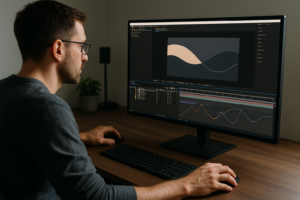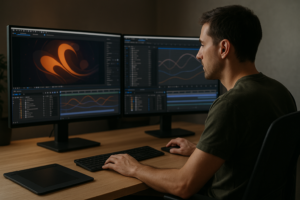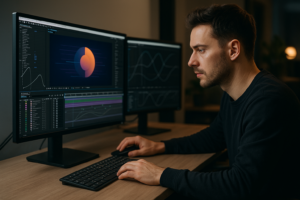

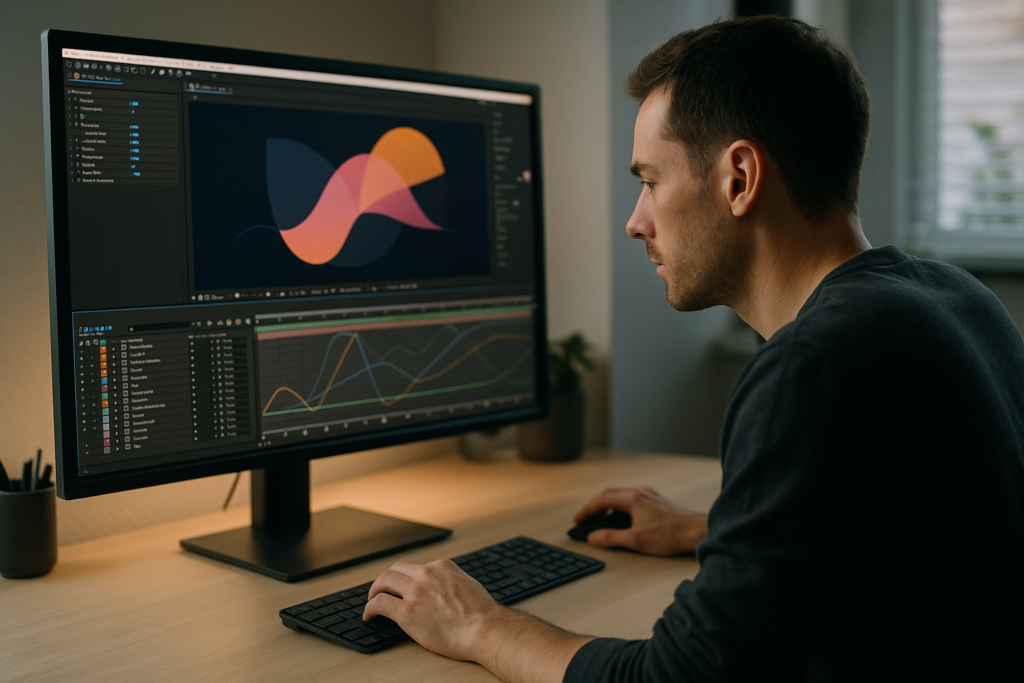
Motion design in After Effects is ultimately about clarity, rhythm, and control. Improving it is less about fancy effects and more about solid fundamentals, repeatable systems, and efficient workflows that scale from a single shot to an entire edit. This guide focuses on practical ways to improve animation quality while staying fast and organized in real client work.Explore motion templates
Understanding Motion Design Fundamentals
What motion design actually is
Motion design is the craft of using movement, timing, and visual hierarchy to communicate ideas. In After Effects, this usually means animating typography, shapes, UI elements, logos, and footage in a way that supports a story or message. The goal is not just to make things move, but to make them move with purpose.
Why motion design matters in real projects
Good motion design guides attention. It tells the viewer what to look at first and what matters most. When you understand how to improve motion design, you start to:
- Make edits feel smoother and more professional.
- Connect scenes using motion instead of hard cuts.
- Clarify complex ideas with visual cues and micro-animations.
- Increase perceived production value without huge budgets.
Who benefits from stronger motion design
This topic is essential for:
- Editors who cut mostly in Premiere or similar but finish animations in After Effects.
- Motion designers building logo stings, lower thirds, titles, and explainer graphics.
- Creators making social content, YouTube videos, or product promos who need consistent, on-brand motion.
The core pillars of better motion
To improve animation quality in After Effects, you mainly work on four pillars:
- Timing and spacing: how fast or slow elements move, and how smoothly they accelerate and decelerate.
- Composition: where elements sit on screen, and how they enter/exit the frame.
- Visual hierarchy: which elements are primary, secondary, and tertiary.
- Consistency: recurring styles, easing, and transitions that tie the whole edit together.
Once these are clear, plugins, effects, and complex setups become tools instead of crutches. You focus on structure first, polish second.
How to Improve Animation Quality Across Different Styles
What improving animation quality really means
To improve animation quality, you are not only fixing wobbly keyframes or adding motion blur. You are aligning motion to intent. That could be:
- Smooth UI and widget animations.
- Energetic kinetic typography for lyrics or hooks.
- Cinematic, subtle movements for moody edits.
- Clean, direct motion for product or finance explainers.
Quality is whether the animation supports the content and feels deliberate.
Different motion design use cases
In After Effects, you might work on:
- UI / HUD widgets – status bars, notifications, and overlays similar to a battery widget animation.
- Brand or fintech visuals – charts, cards, and payments, like in a fintech card animation project.
- Lyrics and music visuals – timing type, shapes, and backgrounds to beats, like a lyrics-based After Effects sequence.
- Content widgets – social and platform overlays, for example a YouTube-style video widget layout.
Each use case has different expectations for pacing, easing, and detail.
Subtle vs energetic animation styles
When learning how to improve motion design, it helps to categorize styles:
- Subtle and minimal – small position shifts, soft opacity fades, slight scaling. Ideal for corporate and UI work.
- Expressive and loud – bouncy typography, fast cuts, color pops. Best for music videos, gaming edits, and hype reels.
- Playful and character-driven – squash and stretch, anticipation, overshoot. Often used for mascot or branded character moments.
The key is consistency. Do not mix hyper-bouncy and ultra-flat motion in the same sequence without reason.
Matching motion to audience and platform
Animation that works in a long-form desktop video might feel too slow for vertical reels. For short-form, you usually:
- Reduce gap time between actions.
- Use quicker easing and snappier transitions.
- Favor bold, legible type and clear focal points.
For long-form or cinematic edits, you can:
- Slow down transitions and use more gradual easing.
- Rely on camera moves and parallax rather than constant cuts.
- Let music drive pacing instead of pure visual chaos.
Improving animation quality is about picking a style, then making every design and timing decision reinforce that style, from first frame to last.
Common Motion Design Mistakes in After Effects
1. Uncontrolled timing and spacing
A frequent issue is animations that feel floaty or rushed. Typical symptoms:
- Elements start and stop suddenly with linear keyframes.
- Easing is inconsistent between similar elements.
- Multiple things move at once with no clear focal point.
Quick fix: Use ease in/out consistently, offset keyframes so elements lead or follow one another, and align big beats with audio or cut points.
2. Ignoring the Graph Editor
Relying on default Easy Ease often leads to animations that feel generic. Without the Graph Editor:
- Movement can feel robotic.
- You struggle to control where the weight of motion sits.
- Fine adjustments become guesswork instead of precise control.
Quick fix: Use the speed graph to shape acceleration/deceleration and create clear, intentional moves.
3. Overusing or misusing motion blur
Motion blur can either elevate or ruin your work:
- Too much blur makes elements muddy and unreadable.
- Inconsistent blur across layers feels fake.
- Enabling it on everything kills performance.
Quick fix: Enable motion blur selectively on core moving layers, and adjust shutter angle to match the pace and look of your project.
4. Messy compositions and naming
Disorganized projects slow you down and hurt quality:
- Randomly named layers and comps.
- Precomps with mixed frame rates and resolutions.
- No logical structure between main sequences and nested comps.
Quick fix: Use naming conventions, color labels, and folders. Keep a single master comp for each deliverable, and nest sections logically.
5. Heavy plugins without purpose
Throwing plugins at every shot often leads to:
- Slow previews and constant RAM issues.
- Hard-to-share projects for teams and clients.
- Overprocessed looks that date quickly.
Quick fix: Only use plugins when native tools cannot achieve the result efficiently. Document dependencies and keep backup versions that avoid non-essential effects.
6. Poor precomp strategy
Precomps are powerful but misused when you:
- Precomp too early and lose flexibility.
- Animate the same property across multiple nested levels.
- Change frame rates or aspect ratios mid-pipeline.
Quick fix: Precomp groups of elements that logically belong together (e.g., a widget, a lower third, a scene block) and keep their settings consistent with your main sequence.
7. Ignoring context of the final edit
Working on a shot in isolation without considering how it sits in the full video causes:
- Jarring shifts in pace from shot to shot.
- Inconsistent transitions.
- Typography and UI motion that do not match earlier moments.
Quick fix: Regularly preview your animation inside the full timeline or edit, and check how each motion choice flows into the next scene.
Choosing the Right Motion Approach for Each Project
Start from the deliverable, not the effect
To improve motion design effectively, decide how the animation will be used before you open After Effects. Your choices for pacing, complexity, and style depend heavily on whether you are creating:
- Vertical social reels or shorts.
- Performance-driven ads.
- YouTube intros and graphics.
- Cinematic edits or music visuals.
- Corporate explainers and UI demos.
Social reels and shorts
For short-form content, you typically want:
- Fast, readable animations that land quickly.
- Big, bold titles and clear callouts.
- Transitions that keep momentum without disorienting the viewer.
Using a consistent set of presets or templates can help you keep style and pace aligned across many clips.
Ads and performance creatives
Here, the motion must support conversion:
- Animations should highlight features, pricing, and key benefits, not distract.
- Entrance and exit motions need to be predictable and on-brand.
- Text must be readable even on small screens.
Testing variations is easier when you base your layouts on a reusable system of components rather than building each ad from scratch.
YouTube intros and overlays
Long-form creators need repeatable motion for:
- Openers and bumpers.
- Lower thirds and topic labels.
- Subscribe or callout widgets similar to those seen in a meeting overlay animation.
Consistency is more important than novelty. A small, polished motion system used across many videos looks more professional than a new style every week.
Cinematic and music-driven edits
For mood-heavy or beat-based work:
- Let the soundtrack dictate key animation beats.
- Use slower, more deliberate moves unless the track demands intensity.
- Reserve high-energy kinetic motion for key moments such as chorus hits or drops.
Studying high-quality mood pieces on platforms like Dribbble can give you ideas for tastefully restrained motion and color.
Corporate and UI-heavy projects
For dashboards, SaaS, and product flows:
- Use clear, directional movement (slide, fade, scale) to show hierarchy.
- Keep easing subtle and similar across all components.
- Align motion with real interactions – click, hover, expand, close.
Using templates to support decisions, not replace them
Pre-built systems and an Unlimited After Effects Templates Subscription can help you:
- Start from a tested structure instead of a blank comp.
- Maintain consistent typography, transitions, and widget behavior.
- Iterate quickly for different brands while keeping a stable motion language.
The key is to choose templates that match your project type and then adapt timing, easing, and styling to suit your client or channel rather than using them verbatim.Compare subscription options
Template-Based Workflow to Improve Motion Design
Think in systems, not one-off shots
To genuinely improve animation quality at scale, treat templates as motion systems. Whether you build your own or use a library, you want reusable building blocks: titles, widgets, overlays, transitions, and recurring visual motifs that you can drop into multiple edits.
Check After Effects version and project settings
Before working with any template or prebuilt project, verify:
- After Effects version: Open the project in the recommended or higher version to avoid broken expressions.
- Frame rate: Match the template comp FPS to your master timeline (commonly 23.976, 24, 25, 30). Mixing frame rates causes judder or off-beat timing.
- Resolution and aspect ratio: Decide upfront whether you are delivering 16:9, 9:16, or 1:1. Set your master comp accordingly and adjust precomps if needed.
Organize keyframes and precomps
Quality motion is easier to maintain when the structure is clean:
- Group related elements (e.g., icon + label + background) into a single precomp.
- Keep main animation keyframes on as few layers as possible.
- Use layer colors and comments to flag important controls such as global timing or color.
When you open a project like a liquid-style animation template, study how its precomps and controllers are organized. Then mirror that logic in your own projects.
Performance and preview tips
After Effects can feel slow, especially when stacking effects. To keep motion design responsive:
- Work at half or quarter resolution until final checks.
- Solo key layers when fine-tuning timing.
- Use region of interest for small areas.
- Leverage disk cache and purge it periodically if previews get unstable.
For heavy scenes, build a lighter proxy comp for timing work with simplified layers, then mirror the timing in the full version.
Managing plugins and dependencies
Templates sometimes rely on third-party tools. Before committing:
- Check the documentation or project panel for required plugins.
- Plan alternatives if collaborators do not have those plugins installed.
- Prefer templates that achieve the core look with native tools where possible.
If you use plugins, bake critical animations into pre-rendered assets for handoff so other editors can work with them without needing your setup.
Customization workflow checklist
When adapting a template for a real project, move through these steps systematically:
- 1. Global controls: Find master controllers for colors, fonts, and basic timing. Change these first so you see the direction clearly.
- 2. Typography: Replace placeholder copy with real text, then adjust tracking, line breaks, and hierarchy. Ensure legibility at intended viewing size.
- 3. Colors: Map your brand colors to primary, secondary, and accent roles. Avoid adding more colors than the design needs.
- 4. Timing: Adjust in and out points to match voiceover, beats, or script pacing. Fine-tune easing in the Graph Editor after structure feels right.
- 5. Transitions: Keep transition types consistent across all scenes. If your template includes several styles, lock in one family and stick with it.
- 6. Final polish: Add subtle camera moves, parallax, or light motion where needed. Avoid piling on extra effects without a clear reason.
Use-case examples for a template-driven approach
Templates shine in repetitive or series-based formats, including:
- Reels and shorts: Quick openers, title cards, and call-to-action end screens across dozens of videos.
- Ads: Variant testing of headlines, imagery, and colorways while keeping motion identical for clean comparisons.
- Product promos: Feature callouts, specs, and UI demonstrations using consistent entry/exit motions.
- Cinematic edits: Lower thirds, time/location cards, and music-synced type sequences reused across episodes.
For example, a creator might reuse a consistent widget animation similar to the structure in a modular editing widget project, adjusting only text and timing per video while maintaining the same motion logic.
Practical step-by-step template checklist
- Import the template project into a clean workspace.
- Set master comp resolution and FPS to your delivery.
- Locate and edit global controls (colors, fonts, logo placeholders).
- Replace media and text with real content.
- Test timing against your audio or rough cut.
- Refine easing using the Graph Editor; keep values consistent across similar elements.
- Check readability on both desktop and mobile dimensions.
- Render a low-res draft and review for continuity across all scenes.
Following a repeatable process like this turns templates into a professional framework instead of a quick one-off trick.
Advanced Motion Design and Workflow Optimization
Build a consistent visual and motion language
At an advanced level, improving motion design is mostly about consistency. Create a small motion style guide for each client or channel that defines:
- Standard easing curves (e.g., soft ease for UI, snappy ease for alerts).
- Default transition types between segments.
- Preferred motion distances and durations.
- How typography and icons should enter and exit the frame.
This prevents drift when projects get complex or when multiple editors collaborate.
Use reusable animation systems
Instead of animating each element individually, build systems:
- Use controllers (nulls or adjustment layers) to drive multiple layers at once.
- Create rigs for lower thirds where you only change text and colors.
- Build slider-based systems for staggered delays, opacity fades, or position offsets.
These systems let you iterate faster while keeping quality high, especially across series and recurring content.
Plan with styleframes and motion tests
Before animating everything, create a few styleframes and a short motion test:
- Lock in composition, color, and typography in static frames first.
- Test one or two key transitions at full quality.
- Adjust based on client or team feedback before scaling to the entire piece.
This saves time and makes the final project feel more cohesive.
Modular transitions across an entire edit
To keep long videos smooth and unified:
- Design a few core transition types (cut, dip, slide, masked wipe).
- Use them consistently rather than introducing a new transition every time.
- Build these transitions as modular precomps you can drop between scenes.
When combined with recurring overlays or widgets, this gives your work a recognizable signature.
Quality control and review passes
Build structured review passes into your workflow:
- Timing pass: Watch with audio and focus only on when elements move, not how they look.
- Hierarchy pass: Mute audio and see if you can still tell what matters most in each shot.
- Technical pass: Check for flicker, aliasing, inconsistent motion blur, or misaligned edges.
Doing separate passes is far more effective than trying to judge everything at once.
Export and render considerations
Polished motion can be ruined with poor exports. Remember to:
- Render at a bitrate appropriate for the platform (avoid unnecessary file bloat).
- Test compression effects on fine lines, gradients, and subtle textures.
- Use visually lossless intermediates if handing off to another editor for final delivery.
For web and social, check your work on both mobile and desktop screens to catch tiny text or overly subtle motion.
Keep projects lightweight for long-term use
If you work with clients or channels over months:
- Remove unused assets and precomps before archiving.
- Consolidate footage and graphics into a clear folder structure.
- Save a clean “template” version of recurring graphics free of project-specific media.
This is especially helpful if you work worldwide with remote teams, where projects may change hands often. A light, well-structured project is easier to reuse and adapt than a heavy, chaotic one.
Motion Design Search Intents and Quick Answers
How do I improve motion design as a beginner?
Focus on timing and easing first. Use simple shapes and text, practice animating in and out with clean curves, and keep compositions minimal so you can see what your keyframes are doing.
How can I improve animation quality without expensive plugins?
Rely on fundamentals: Graph Editor, motion blur, parenting, and precomps. Native tools in After Effects are enough to create professional motion if your timing, spacing, and hierarchy are strong.
What is the best frame rate for motion design?
Common choices are 23.976/24 for cinematic feel, 25 for broadcast in some regions, and 30 for web and UI-heavy content. Choose one based on your platform and keep it consistent through the whole project.
How do I make my UI animations feel more real?
Base your motion on actual interactions: hover, click, swipe. Keep distances small, use subtle easing, and limit the number of elements that move at once. Study real product demos or explore UI samples similar to a map and location widget layout for inspiration.
How do I keep long edits visually consistent?
Create a small library of titles, lower thirds, and overlays. Reuse the same easing, colors, and transition types everywhere. Save these as a dedicated motion package so each new episode or video starts from the same foundation.
How many keyframes is too many?
If you are constantly adding keyframes to correct motion, the base curve is probably wrong. Aim for fewer, well-shaped keyframes per property, and use parenting, expressions, or controllers to coordinate multiple layers.
Bringing It All Together for Better Motion Design
From fundamentals to workflows
Improving motion design in After Effects is a mix of solid fundamentals, clear project structures, and smart reuse. When you control timing, easing, and hierarchy, even simple graphics can feel premium. When your comps are organized and your templates are reliable, you can focus on creative decisions instead of technical firefighting.
Focus on cleaner motion and consistent systems
As you refine your process, think less about individual shots and more about systems: shared easing curves, recurring transitions, and reusable widgets that make every edit feel like part of the same visual language. This is how you improve animation quality not just once, but across entire series and client portfolios.
Next steps for your After Effects workflow
Apply one or two changes at a time: clean up your project structure, standardize your easing, or adopt a small library of motion-ready components. Over a few projects, these habits compound into faster turnarounds, smoother animations, and more confident creative choices.
When you are ready to speed up your process with a broader library of reusable motion systems, consider exploring an Unlimited After Effects Templates Subscription focused on real-world workflows and editor-friendly setups.Browse AE plans now
Conclusions
Improving motion design is about deliberate timing, clear hierarchy, and efficient systems inside After Effects. As you refine easing, structure, and template-based workflows, every project benefits: cleaner movement, faster iterations, and more consistent, professional results for clients and channels worldwide.
FAQ
How can I quickly improve motion design in After Effects?
Start by standardizing your easing curves, organizing your comps, and limiting how many elements move at once. These three changes alone will make most animations feel cleaner and more professional.
What tools in After Effects matter most for animation quality?
The Graph Editor, parenting, precomps, and motion blur controls are key. Mastering these gives you precise control over timing, structure, and polish without needing heavy plugins.
Do I need plugins to achieve high-quality motion design?
No. Plugins are helpful but not required. Strong results come from good timing, hierarchy, and composition. Plugins should enhance a solid base, not replace fundamentals.
How do templates help improve animation quality?
Well-built templates provide tested structures, consistent easing, and reusable layouts. They let you focus on content and timing while keeping visual and motion language coherent across projects.
What frame rate should I use for motion graphics projects?
Choose 23.976 or 24 fps for a filmic feel, 25 fps for some broadcast standards, or 30 fps for web and UI-heavy content. Commit to one per project and match all comps to it.
How do I keep After Effects responsive on complex animations?
Work at half or quarter resolution, solo key layers for timing adjustments, limit heavy effects until late in the process, and regularly clear or manage your disk cache for stable previews.