
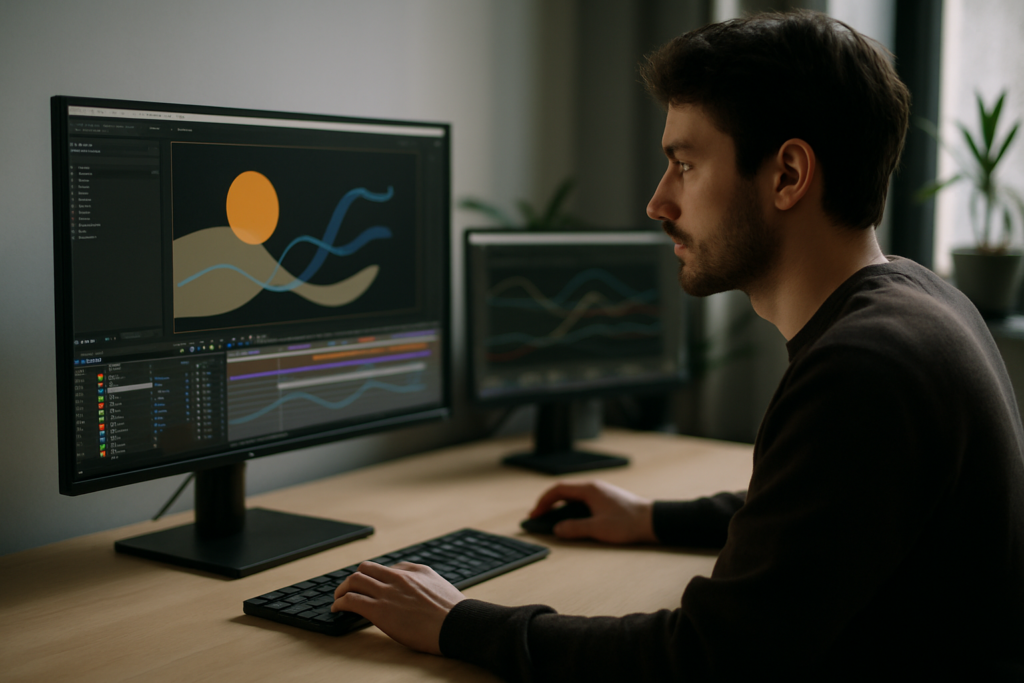
Motion design trends 2026 are less about flashy tricks and more about systems, speed, and clarity. Editors and designers are expected to ship more versions, faster, with consistent branding across every platform. This guide unpacks what is changing in motion design and how to adapt your After Effects workflow without burning out.Explore subscription plans
What motion design trends 2026 really means
Defining motion design trends 2026
When people talk about motion design trends 2026, they are usually referring to how animation style, layout, typography, and pacing evolve across digital content. It is not only about looks; it is about how motion supports stories on social platforms, in product launches, live streams, and full campaigns.
Why these trends matter for editors
If you work in After Effects, trends affect your day-to-day decisions: how you structure comps, how many versions you output, how you prepare assets for editors in Premiere, and which visual language your clients expect. A trending style can influence:
- How bold or minimal your layouts feel.
- How much kinetic typography you use versus static titles.
- How snappy or slow your timing and easing curves need to be.
- How complex your transitions are allowed to get before they distract.
Who motion design trends 2026 is for
These trends are relevant if you are:
- A freelance motion designer delivering animated brand kits and explainers.
- An editor who jumps into After Effects for titles, callouts, and quick effects.
- A content creator making shorts, reels, and overlays across multiple channels.
- A studio lead building scalable systems for a team working worldwide.
How trends connect to workflow
Trends in 2026 lean heavily toward modular, reusable assets rather than one-off hero animations. That means more master comps, flexible controls, and clearly labeled systems. Templates, presets, and shared project structures stop being shortcuts and become the backbone of a predictable pipeline. Following trends is less about copying a look and more about designing a workflow that can echo that look across a whole channel or campaign.
After Effects trends shaping styles and formats
Visual directions inside After Effects trends
After Effects trends in 2026 reflect what audiences are used to seeing in feeds and on streaming platforms. Several directions stand out:
- Editorial motion: Clean grids, subtle wipes, and restrained typography, especially for tech and finance content similar to polished product story videos.
- Hybrid 2D and 3D: Flat UI with depth cues, fake parallax, and camera moves that feel 3D without heavy rendering.
- Micro-interactions: Tiny UI ticks, hover states, and tap feedback for product and app explainers.
- Expressive type: Kinetic typography, variable fonts, and type-driven layouts that almost replace traditional B-roll.
Usage-based motion design trends 2026
Different platforms are driving specific motion patterns:
- Short-form vertical: Fast hook in the first second, extremely clear hierarchy, bold captions, and transitions tuned to music beats.
- YouTube long-form: On-brand lower thirds, chapter cards, widgets and overlays that match a channel identity, similar to a refined YouTube graphics system.
- Hybrid live and async: Motion graphics for screen shares, webinar overlays, and framing elements around talking heads, like smart framing in a meeting-style layout.
Templates, packs, and project types
Because clients expect consistency across all outputs, editors are leaning more on:
- Brand systems: Master projects with all transitions, lower thirds, and bumpers wired to global controls.
- Series packs: Reusable intros, topic cards, and end screens that can be re-labeled per episode or playlist.
- Specialized widgets: Map pins, UI callouts, and phone frames, similar to a location overlay like a map-based widget.
Where discovery happens
Many editors are referencing curated showcases on platforms like Behance to understand which layouts, color palettes, and pacing rules are actually landing with audiences. The big shift is that inspiration now feeds structured templates, not just experimental one-offs.
Common After Effects mistakes that clash with 2026 trends
Overcomplicating timing and easing
A frequent issue is adding complex easing curves everywhere. While the graph editor is powerful, current motion design trends 2026 favor clarity and legibility over constant bounciness. Overdone easing can make text feel unprofessional or distract from the message.
- Use simple ease-in/ease-out for most UI elements.
- Reserve overshoot or bounce for key storytelling beats.
- Check legibility at playback speed, not just frame-by-frame.
Ignoring motion hierarchy
Many projects push everything to move at once. This results in visual noise and confuses viewers. Instead, define a hierarchy:
- Primary: Titles and key product visuals.
- Secondary: Supporting icons, accent lines.
- Tertiary: Background flourishes and textures.
Messy comps and precomps
Trendy layouts require quick iteration. If your comps are disorganized, updating a campaign look or revising a client brand becomes painful. Common issues include:
- Random precomp names like “Comp 23”.
- Assets, renders, and references in the same folder.
- Color controls buried inside multiple precomp levels.
Heavy plugins for simple tasks
Using large plugins for basic transitions or text moves can slow previews and break projects when collaborators do not have the same tools installed. Where possible, build key moves with native tools and reserve plugins for effects that cannot be replicated easily.
Ignoring performance constraints
Trendy does not mean practical if your timeline does not play in real time. Editors often:
- Work at 4K with huge comps when delivery is 1080×1920.
- Leave 3D layers and motion blur on for everything.
- Use high-bitrate renders for simple social posts.
No system for revisions
Trends evolve, and campaigns pivot. If you do not build with change in mind, even small updates become rebuilds. To avoid this:
- Keep one global color and typography control layer wherever possible.
- Use adjustment layers and expressions instead of copying the same effect 30 times.
- Maintain a simple versioning convention per sequence or episode.
Choosing the right trend-driven approach for each project
Match motion design trends 2026 to content type
Your After Effects choices should change depending on where the video lives and what it needs to achieve.
- Social reels and shorts: Prioritize bold type, clear callouts, and rhythmic cuts. Use fast in and out animations and clear color contrast. Avoid intricate 10-second intros; you need impact within the first second.
- Paid ads: Here, trends must support conversion. Stick to clean compositions, readable offers, and measured pacing. Contemporary looks can be minimal as long as the message and brand are obvious.
- YouTube content: Viewers expect consistent packaging: intros, mid-roll segments, and end screens that feel part of a visual universe, similar in spirit to a structured overlay project such as a two-host edit system.
- Cinematic or brand films: Here, subtlety matters. Motion should support narrative rather than overpower it; soft camera moves, light typography, and restrained transitions feel current.
- Corporate explainers and product demos: UI animations, data visuals, and screen callouts often follow an understated, confident style—minimal color, sharp grids, and measured easing.
Deciding when to build vs. start from a template
As timelines compress, more teams mix from-scratch design with template-driven workflows. A good rule of thumb:
- Build from scratch for flagship brand films or once-a-year hero launches.
- Customize templates for repeating formats like weekly shows, educational series, or recurring ad sets.
- Standardize essentials like lower thirds and transitions, and keep only the hero sequence fully bespoke.
Templates as part of a trend-aware toolkit
Instead of treating templates as shortcuts, many motion designers now see them as reusable systems they can art direct. When combined with your own typography, color choices, and timing decisions, they help you align with 2026 visual expectations while keeping production realistic.
Collaborating and sharing work
For teams working worldwide, adopting compatible templates, naming conventions, and project structures means any editor can jump into a project without guesswork. Saving style presets, master control rigs, and comp templates lets you scale trends across channels without rethinking every timeline.Try trend-ready templates
Building a future-proof After Effects template workflow
Start with version and project settings
Before you lean into motion design trends 2026, lock in technical foundations.
- After Effects version: Confirm which version your team or clients use. Save a backward-compatible version when you need to share.
- Resolution and aspect ratio: Decide up front whether your master is 16:9, 9:16, 1:1, or a mix. Many editors now create master 4K 16:9 comps and nested vertical variants.
- Frame rate: 23.976 or 25 fps for cinematic work; 29.97 or 30 for most social; 50 or 60 for gaming or UI-heavy content. Pick and stay consistent across the project.
Organize comps, precomps, and naming
Trendy motion is useless if no one can find the right comp.
- Use clear folders like 01_MAIN, 02_PRECOMPS, 03_ASSETS, 04_RENDERS.
- Name comps descriptively: MAIN_YT_INTRO, VERTICAL_REEL_HOOK, LOWER_THIRD_TEMPLATE.
- Place control comps in a dedicated CONTROLS folder with obvious labels.
Keyframe organization and animation structure
For modern, minimal looks:
- Group keyframes in short bursts around meaningful beats instead of scattering them across the timeline.
- Use nulls for camera and layout systems so you can shift timing without touching dozens of layers.
- Keep easing consistent: create a few reusable custom curves that match your brand feel.
Performance-first mindset
Contemporary After Effects trends rely on fast iteration. To keep previews smooth:
- Work at half or quarter resolution while blocking motion.
- Use region of interest and solo layers when refining details.
- Pre-render heavy sequences and bring them back as intermediates.
- For screen-heavy work, consider screen capture and overlays like the pacing seen in dashboard and UI-style widgets.
Plugin dependencies and safe alternatives
Trends shift, but broken projects are timeless headaches.
- Document any third-party plugins used in a separate text or guide layer.
- Prefer native effects when possible, especially for text animation and simple transitions.
- If a look depends on a plugin, create a fallback version using built-in tools for collaborators without licenses.
Customization workflow
To align with motion design trends 2026 while staying editable:
- Create one main control layer with color, stroke width, corner radius, and texture toggles.
- Set up style presets for typography (headline, subtitle, caption) and avoid per-layer manual changes.
- Expose key controls via Essential Graphics so editors in Premiere can update copy and colors without entering complex comps.
Real-world use cases and checklists
Shorts and reels checklist:
- Hook animation hits in the first second.
- Text readable on a small phone screen.
- Safe areas respected for app UI overlays.
Ad and product promo checklist:
- Clear product hero moments with enough screen time.
- Offer and CTA text large and legible.
- Brand elements (logo zone, accent shapes) in consistent positions.
Cinematic edit checklist:
- Subtlety in camera moves and type reveals.
- Consistent grain, glow, and color treatments applied via adjustment layers.
- End card that feels like a natural extension of the film, not a separate asset.
Aligning templates with narrative
Whether you are building a lyrics-driven piece like a kinetic type music video or a simple explain-on-screen, lean on templates as structure, not shackles. Let the layout and animation system carry the trend, while your copy, pacing, and footage tell the story.
Advanced motion systems and long-term optimization
Designing reusable animation systems
Motion design trends 2026 reward teams that think in systems instead of individual comps. Build:
- Token-based layouts: Define positions for title, subtitle, labels, and imagery that can be reused across many scenes.
- Modular transitions: Design a small library of on-brand transitions that work across all content types.
- Styleframes as contracts: Establish a few key frames that lock in composition, color, and type before animating full sequences.
Consistency across episodes and campaigns
Audiences associate a look with a channel or brand. To keep that consistent:
- Use the same timing for similar elements (e.g., all lower thirds animate in over 8 frames).
- Maintain a limited color palette with clear roles (accent vs. background vs. highlight).
- Save presets for shadows, strokes, and motion blur settings.
Quality control passes
Trendy design still needs discipline. Before final render:
- Do a typography pass for widows, orphans, and awkward breaks.
- Check edge cases: long names, two-line titles, localized copy.
- Review motion for consistency: no random easing styles or rogue transitions.
Export and render strategy
To keep projects efficient:
- Use the Render Queue or an encoder workflow tuned for your platform (ProRes or high-bitrate for masters, H.264 or HEVC for distribution).
- Render with alpha only when overlays or keying are needed.
- Consider intermediate mezzanine files for heavy composites.
Avoiding dynamic link pitfalls
Dynamic Link can speed up edits but also create fragile projects.
- Avoid building huge multi-minute comps just to send one lower third.
- For long series, consider exporting template-based graphics as pre-rendered toolkits to protect your Premiere timeline from slowdowns.
Keeping projects lightweight over time
Trends evolve, but your library should remain usable for years.
- Regularly archive completed jobs with only necessary assets.
- Convert unused elements into separate, lean template files.
- Annotate complex rigs with guide layers so future you or collaborators understand how they work.
Motion design and After Effects long tail questions
Common search intents around motion design trends 2026
- What motion design styles will feel outdated by 2026? Overly complex glitch, heavy long lens flares, and random 3D extrusions with no purpose are already fading in favor of cleaner, functional motion.
- How minimal can my graphics be and still feel current? As long as hierarchy and contrast are clear, minimal design can feel very 2026—just avoid generic fonts and lifeless timing.
- Do I still need 3D for modern motion design? Not always. Many projects fake depth with 2.5D parallax, shadows, and smart camera moves instead of full 3D workflows.
- What is the best fps for trending social motion? Most editors stay at 29.97 or 30 fps for social feeds, with carefully tuned motion blur and snappy easing.
- Can I reuse the same template across clients? Yes, if you design it to be neutral and configurable—separate brand colors, logos, and typography into easy-to-swap controls.
- How do I keep my reel looking current? Update it with pieces that use current typography, pacing, and layout systems, and retire any clips that rely on dated effects or overused glitches.
- What is the easiest way to experiment with new trends in After Effects? Start with a short title card or lower third, test a new layout or easing style, and then scale it up if it feels good in context.
Bringing motion design trends 2026 into your daily workflow
Key takeaways for editors and designers
Motion design trends 2026 prioritize clarity, scalability, and system-based thinking. Instead of chasing every new look, focus on a small, reliable set of animation rules, layout grids, and typographic choices that can support many different videos.
Benefits of a trend-aware After Effects setup
When your projects are built with consistent controls, modular comps, and carefully chosen motion styles, you get:
- Cleaner, more confident design language.
- Faster turnarounds for recurring content and campaigns.
- More predictable results when collaborating or revising.
Next steps
Audit one of your existing projects and identify where it could align better with 2026 expectations: simplify motion, clarify hierarchy, and centralize controls. Then, turn that updated project into a reusable system you can apply across reels, ads, and longer edits.
Adopting a modern, template-aware mindset lets you stay current with motion design trends 2026 while protecting your time and energy, so you can focus on ideas instead of repetitive setup.Get unlimited AE templates
Conclusions
Motion design trends 2026 reward editors who think in systems, not one-off shots. Build clean layouts, consistent timing, and modular templates, and you will be ready for whatever format comes next, from shorts to cinematic edits, without constantly rebuilding your After Effects projects from scratch.
FAQ
How can I keep up with motion design trends 2026 without changing my style constantly?
Focus on updating your layout systems, typography, and pacing rather than reinventing every visual detail. Refresh key elements yearly while keeping your core voice intact.
Which After Effects trends are most important for social media content in 2026?
Bold typography, quick but readable hooks, and simple, modular transitions tuned to music are most important. Clarity and legibility on small screens matter more than complex effects.
Do I need advanced plugins to follow motion design trends 2026?
No. Most trends can be achieved with native After Effects tools. Use plugins selectively for tasks that are difficult to replicate, and document them to avoid project issues.
How do I make my After Effects templates easier for clients to edit?
Centralize colors and typography on control layers, use clear naming, expose key parameters via Essential Graphics, and avoid burying controls deep inside multiple precomps.
What file format should I render for trend-driven social posts?
Render a high-quality master in ProRes or a similar codec, then export platform-ready versions in H.264 or HEVC with bitrates optimized for each channel.
How can I tell if my motion style already looks dated?
Compare your work to recent campaigns and curated showcases. If your animations rely heavily on random glitch, overused lens flares, or busy 3D text, it may be time to refresh.