
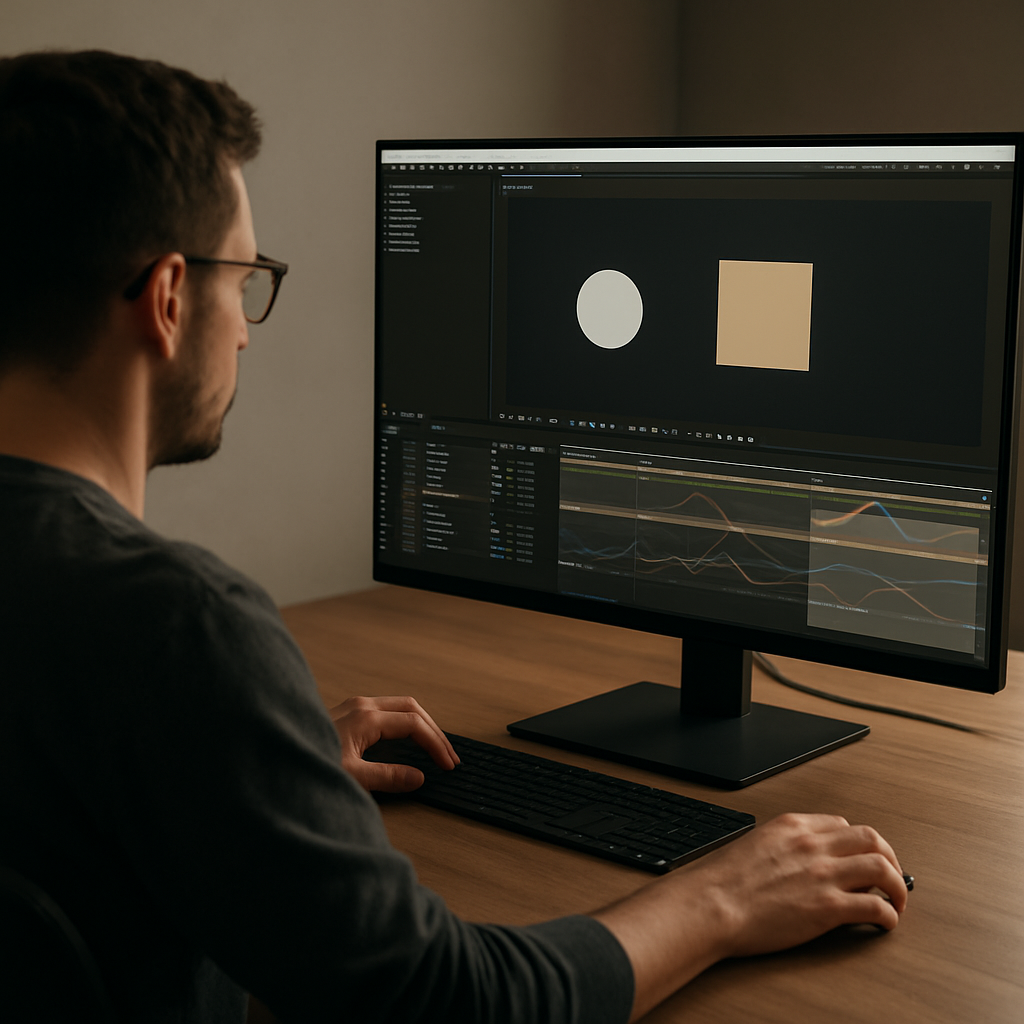
Minimal motion graphics are about doing more with less: fewer elements, clear timing, and intentional movement. When done right, they feel premium, modern, and effortless. This guide walks through practical workflows in After Effects so you can design cleaner, faster, and with more confidence in any client or content project.Explore minimal AE templates
Understanding Minimal Motion Graphics
What minimal motion graphics are
Minimal motion graphics focus on clarity, hierarchy, and restraint. Instead of filling the frame with effects, they use clean shapes, simple typography, and controlled animation to guide the viewer’s eye. Every keyframe has a reason to exist; anything that does not support the message is removed.
Core principles of minimal motion design
- Intentional reduction – fewer layers, fewer colors, fewer moves.
- Clear hierarchy – type size, weight, and position create natural focus.
- Controlled timing – subtle ease-ins, smooth spacing, and consistent motion.
- Limited palette – two or three colors plus neutrals keep things cohesive.
- Geometry and grids – alignments, margins, and spacing stay consistent.
Why minimal motion graphics matter
Minimal motion graphics work brilliantly for brands, product explainers, social content, and UI-driven videos. They load quickly, are easier to adapt, and translate well across platforms. Clients often perceive this style as premium because it feels intentional and uncluttered, even when the underlying animation is simple.
Who this style is for
- Editors and motion designers who want a reliable, repeatable style for multiple clients.
- Content creators who need fast, clean visuals that still look high-end.
- Agencies and in-house teams building cohesive motion systems across many deliverables.
How After Effects fits into minimal design
Adobe After Effects is ideal for minimal motion because it gives you precise control over keyframes, easing, grids, and typography. You can build reusable compositions, styleframes, and presets that support a minimal look, then reuse them across campaigns with only small tweaks.
Once you understand how to create minimal motion graphics from a design perspective, the next step is applying those ideas to specific workflows, like minimal motion design After Effects templates for titles, UI widgets, and branded layouts.
Minimal Motion Design After Effects Workflows
What minimal motion design looks like in After Effects
Minimal motion design in After Effects usually focuses on a few key asset types: text, simple shapes, and UI-inspired elements. Instead of complex 3D or heavy particle systems, you work with rectangles, masks, and clean transitions to create clarity and rhythm.
Common minimal motion design project types
- Title and lower third systems – simple type with a supporting bar or block reveal.
- UI and product widgets – panels, cards, and clean overlays for apps or dashboards.
- Logo idents and bumpers – simple logo builds, mask reveals, and shape-driven motion.
- Data and location callouts – minimal info panels, maps, and markers.
You can see minimal UI-style layouts in projects like the modern YouTube widget interface, where flat shapes, tight spacing, and subtle easing create a clean, functional feel.
Subtypes of minimal motion in After Effects
- Type-led minimalism – typography carries most of the visual interest, often on a solid or gradient background.
- Grid-based UI minimalism – inspired by dashboards and widgets, using cards and modular panels.
- Monochrome or duotone minimalism – heavily limited color palette, often just one accent.
- Soft motion minimalism – very gentle easing, longer durations, and lots of negative space.
Templates and system thinking
Minimal motion design After Effects workflows benefit from systems: reusable precomps, style guides, and template projects. For example, building a library of modular title layouts, info panels, and transitions lets you quickly assemble consistent edits for multiple videos in a series.
Look at panel-based UI pieces such as a subtle dashboard overlay similar to the clean design of a payment interface layout to understand how modular shapes, soft easing, and tight spacing combine into a minimal system.
User intent and how it shapes your minimal style
- Brand and product videos need minimal motion to feel polished and trustworthy.
- YouTube and social content benefit from clear, legible text graphics that do not fight the footage.
- Explainers and tutorials need simple, readable callouts and step indicators.
- Corporate or fintech edits often prefer clean interfaces and understated motion instead of flashy glitches.
As you refine your style, you will choose the subtype that matches your audience and platform, then build or adapt templates in After Effects that keep that look consistent across every deliverable.
Common Minimal Motion Design Mistakes
Over-animating simple layouts
Minimal design breaks when too many things move at once. Editors often animate every element, every second. This creates noise and makes the piece feel busy instead of clean.
- Limit simultaneous animations to one or two focal elements.
- Use staggered timing with small overlaps.
- Let key elements rest on screen without constant motion.
Messy compositions and naming
Minimal visuals do not help if the After Effects project is chaotic. Poor naming and no structure lead to mistakes and slow revisions.
- Use clear comp names like MAIN_Intro, TITLE_System, LOWER_Thirds.
- Group layers with label colors by function (text, shapes, controls).
- Precomp logically: one precomp for each reusable module.
Ignoring timing and easing
Many motion designers rely on default linear keyframes, or overuse extreme easing presets. Both can make minimal motion feel mechanical or cheap.
- Use the Graph Editor to create gentle, consistent curves.
- Avoid drastic bounces or overshoots unless they fit the brand.
- Match ease strength across different elements so the motion feels unified.
Misusing motion blur and effects
Motion blur can soften motion, but too much blur on simple shapes looks muddy, especially at smaller sizes.
- Enable motion blur only for layers that actually need it.
- Check small text at 100 percent scale to ensure readability.
- Use subtle glow or grain very sparingly; minimal does not mean flat, but it should never feel noisy.
Heavy plugins and unnecessary complexity
Using multiple third-party plugins for basic shapes, text, and transitions can make projects fragile and harder to share.
- Rely on native shape layers and text animators for core motion.
- Use expressions and adjustment layers instead of duplicated effect stacks.
- Keep effects stacks shallow; disable what you are not using.
Inconsistent spacing and alignment
Minimal compositions expose every tiny misalignment. Uneven margins or inconsistent padding around text instantly break the premium feel.
- Use guides and the Align panel to keep elements on a grid.
- Define standard spacing values (8 px, 16 px, 24 px, etc.).
- Check titles and lower thirds on several safe margin setups.
Checklist before you move on
- Are only the essential elements animated?
- Is the structure of comps and layers clear?
- Do all motions share similar easing?
- Is motion blur used only when it adds value?
- Are plugins absolutely required for this look?
- Is your spacing and alignment consistent in every layout?
When you address these common mistakes, your minimal motion graphics start to feel intentional and professional, even with very simple setups.
Choosing the Right Minimal Motion Approach
Match the style to the platform and goal
The way you build minimal motion graphics should change based on where the piece will live. A 6-second bumper before a YouTube video has different needs than a 45-second product walkthrough or an internal corporate explainer.
For social reels and shorts
- Use bold, legible type and short phrases.
- Keep animations snappy but not jittery: 8–16 frame transitions.
- Use high-contrast layouts that read on small screens.
Clean UI-style cards like a simplified streaming overlay or comment widget similar to the layout used in this split-screen edit concept work well for reels and shorts where information must be digestible in seconds.
For ads and product promos
- Focus on clarity of offer and features; the motion should support the copy.
- Use modular scenes: hero title, feature bullets, UI or product shots, CTA.
- Maintain a consistent color system aligned with the brand.
For YouTube content
- Design reusable title, lower third, and chapter card systems.
- Keep animations subtle so they do not distract from the host or screen capture.
- Use slightly longer hold times to give viewers space to read.
For cinematic and narrative edits
- Lean into slower, more atmospheric motion with fewer on-screen elements.
- Use negative space and subtle parallax instead of big transitions.
- Restrict the palette to keep attention on the footage.
For corporate or finance brands
- Prioritize stability and trust: no chaotic motion or gimmicky effects.
- Use simple lines, cards, and icons to represent data and processes.
- Stick to consistent corner radii, line weights, and spacing.
Where templates make sense in your decision
Once you know the output type, you can decide whether to build your system from scratch or start from a minimal template. Templates are helpful when you need:
- Consistent titles, lower thirds, and info panels across many videos.
- Pre-built easing, spacing, and color controls you tweak once per project.
- Faster turnaround while keeping a premium minimal style.
Many motion designers maintain their own libraries and also explore curated work on platforms like Behance to stay inspired and aligned with current minimal trends while still keeping their workflow efficient.
Once you pick the direction and whether to start from a template, you can move into a more structured workflow in After Effects, designing a project that supports minimal motion from the ground up.Get minimal AE-ready systems
Step by Step Minimal Template and Workflow Guide
Plan the system before opening After Effects
Decide on your core elements: title style, lower third style, info panel, and transition type. Sketch rough frames or boards so you are not designing blindly on the timeline.
Set up project and composition basics
- Choose the main resolution (1080×1920 for vertical, 1920×1080 for horizontal, 1080×1080 for square).
- Lock in frame rate early (typically 24, 25, or 30 fps). Changing this later affects timing.
- Create master comps for each format if you need multiple aspect ratios.
For reference on how simple elements can still feel elevated, check out a clean lyric concept like this text-centric layout, where typography and timing carry the entire idea.
Build clean hierarchies and naming conventions
- Name comps with prefixes: SYS_ for systems, MOD_ for modules, SCN_ for scenes.
- Use clear layer names: TXT_Title, BG_Shape, CTRL_Color.
- Color-label layers by role: text (one color), background shapes (another), controls (another).
Create a minimal style control layer
Use an adjustment or null object as your style controller:
- Add color controls for primary, secondary, and background colors.
- Add slider controls for border radius, stroke width, and overall scale where applicable.
- Link key properties via expressions to keep the entire system consistent.
Design the base typography system
- Choose two text styles at most: headline and body.
- Set consistent tracking, line spacing, and alignment.
- Create text animators for opacity and position that you can reuse with slight variations.
Build one minimal title module
Start with a single title comp:
- Create a background bar or card with rounded corners.
- Use the Align tools to center text within the shape with consistent padding.
- Set subtle in/out animations: 8–12 frame ease-in, 6–10 frame ease-out.
Once you have one title module, duplicate it and adjust comps for variations (top-left, centered, lower third) while keeping the same easing and spacing rules.
Organize precomps and reusable modules
Group your system into logical precomps:
- SYS_Titles – all title variations.
- SYS_LowerThirds – name and descriptor layouts.
- SYS_Panels – info cards, callouts, and UI-style panels.
- SYS_Transitions – simple wipes, slides, or shape-based reveals.
Use these modules to assemble sequences quickly across projects.
Performance and preview settings
- Use 1/2 or 1/3 resolution previews for layout and timing; switch to full only for final checks.
- Limit preview area to the active segment using Work Area.
- Turn off heavy effects while editing; enable them again for render passes.
Proxy and caching basics
- Create proxies or lower-resolution footage for heavy screen captures or product renders.
- Use disk cache and clean it periodically to avoid slowdowns.
- Avoid nested comps three or four levels deep; flatten where practical.
Manage plugin dependencies
Minimal projects are the perfect place to reduce plugin reliance:
- Use native shape layers instead of third-party shape generators.
- Build transitions with masks and track mattes rather than heavy transition packs.
- If you must use plugins (for example, for depth or blur), document them in a README layer in the project.
Customization workflow for colors and typography
Create a “global controls” comp where users can quickly adapt the design:
- Expose color controls that feed into your shapes and text layers via expressions.
- Allow switching between light and dark themes using a simple checkbox or slider.
- Document which fonts are expected, with recommended fallbacks.
Timing and transition checklist
- Keep in/out animations short and consistent across all modules.
- Stagger child elements (icons, labels) by 2–4 frames for subtle depth.
- Use one or two transition types throughout a video for cohesion.
Use cases and how to adapt the system
Reels and shorts: Use bold title modules and full-frame color cards. Build quick cutdowns by swapping text and recoloring shapes, reusing the same motion logic.
Ads and product promos: Combine hero titles, simple product frames, and minimal feature lists. Use clean overlays similar to a basic performance stats widget to frame key information without visual clutter.
Corporate explainers: Emphasize card-based info modules and simple icon callouts. Keep motion slower and more reserved, but maintain consistency across every section.
YouTube and long-form: Build a mini toolkit with openers, lower thirds, and chapter headers. Save them in a dedicated folder so every episode feels like part of the same series.
By thinking like a system designer instead of a one-off animator, you create minimal motion graphics that are easy to maintain, adapt, and reuse over months of client or personal content work.
Advanced Minimal Motion and Long Term Workflow
Build reusable animation systems
Instead of keyframing every new element, create core animation systems. For example, build a universal “card in” animation precomp that you can reuse with different content. Swap text and images, but keep the same easing, duration, and direction.
Use styleframes and reference comps
- Create a styleframe comp that shows your main layouts together: title, lower third, info panel, transition.
- Lock this comp once approved so you can reference spacing, color, and type.
- Duplicate it when exploring variations but preserve the original as your visual baseline.
Modular transitions and sequences
Minimal motion shines when the whole edit feels like one system. Design transitions as reusable segments:
- Shape wipe transitions that reveal the next scene with a single bar or panel.
- Simple slide transitions where content moves on a grid.
- Card-based cut-ins between segments, maintaining consistent timing.
Combine these with subtle animated UI overlays similar to a clean conferencing or call layout like the one used in a video meeting interface concept to keep transitions feeling structured, not random.
Maintain consistency across multiple videos
- Lock animation durations: for example, all titles animate in over 10 frames and out over 8.
- Standardize padding, corner radius, and stroke weight across all modules.
- Document your system in a reference comp or text layer that other editors can read.
Quality control passes
Minimal motion reveals small flaws easily, so perform focused QC passes:
- Animation pass – solo key animated layers and watch for pops or inconsistent easing.
- Spacing pass – toggle on guides and grids to check alignments.
- Color pass – check accessibility and contrast on different devices and backgrounds.
Export and render considerations
- Use visually lossless mezzanine codecs for master exports before delivery formats.
- Check titles on both light and dark YouTube or app backgrounds if they may overlay UI.
- Render short internal test exports to catch issues before final full-length renders.
Dynamic link and lightweight projects
When using dynamic link with editing software, be selective:
- Keep motion graphics in dedicated, tidy comps to avoid bloated timelines.
- Pre-render complex sequences that do not need constant tweaks.
- Avoid unnecessary solids and adjustment layers; merge where it does not affect flexibility.
Versioning and archiving
- Save incremental versions when making big changes in style or timing.
- Collect files when archiving so fonts, images, and footage stay linked.
- Store your minimal motion system in a clearly labeled master folder for future reuse.
With these advanced practices, your minimal motion graphics workflow becomes scalable: you can handle more clients, more series, and more revisions without your After Effects projects becoming a burden.
SEO Driven Minimal Motion FAQs and Quick Answers
Common search topics around minimal motion graphics
- How to create minimal motion graphics without looking boring – Rely on strong typography, rhythm in cuts, and subtle staggered motion. Use a limited color palette but introduce small accents in key places like CTAs or icons.
- How to get smooth minimal motion design After Effects timing – Use the Graph Editor to soften ease curves, and keep easing values consistent between title, panel, and icon animations so the motion feels unified.
- How many colors should minimal motion graphics use – Aim for one background, one primary accent, and possibly one secondary accent. Neutral grays and off-whites can support the main palette without cluttering it.
- What is the best frame rate for minimal motion graphics – 24 or 25 fps creates a more cinematic feel, while 30 fps can feel slightly sharper and more digital. Decide based on platform and footage, then stick with it for the whole project.
- Can minimal motion graphics work for energetic content – Yes, as long as you keep the shapes and typography simple while increasing tempo through cuts and music sync rather than overwhelming the frame with effects.
- How to adapt minimal templates to different brands – Build your system around neutral shapes and robust text controls. Then swap typefaces, colors, and minor layout details (corner radius, stroke thickness) while preserving the same easing and timing.
- How to create minimal lyric or caption videos – Use a simple grid and strong type hierarchy with one style for main lyrics and a smaller style for secondary text. Animate lines in with subtle position and opacity changes, similar to a clean caption layout used in many text-forward edits.
- How to keep projects fast on older machines – Limit comps, avoid deep nesting, use shape layers instead of large raster graphics, and disable motion blur or high-sample effects until the final render pass.
- Is minimal motion graphics suitable for worldwide audiences – Yes. Clean typography, clear icons, and restrained motion read well across cultures. Just ensure fonts support the language sets you need and test legibility on different devices.
- How to practice minimal motion design efficiently – Pick a 10–20 second segment and design one tight system of titles, panels, and transitions. Recut different scripts into the same system until the style feels natural.
These targeted answers address the most common questions around how to create minimal motion graphics so you can refine your approach with focused practice rather than guesswork.
Summary and Next Steps for Minimal Motion Graphics
Key takeaways
Minimal motion graphics succeed when every element has a reason to exist. Clean typography, tight spacing, and consistent easing do more for perceived quality than any heavy effect. In After Effects, that means organized comps, reusable modules, and a focused style system you can apply across multiple videos.
How to move forward
- Define your core minimal style: palette, type hierarchy, and motion rhythm.
- Build or adapt a small library of titles, lower thirds, and panels.
- Use a single, well-structured project as your baseline for future edits.
- Refine over time by reviewing exports and tightening timing, spacing, and consistency.
With a systematic approach, minimal motion graphics become one of the fastest, most reliable ways to deliver premium results across client work, social content, and brand series, all from the same well-structured After Effects toolkit.
Start building minimal systems now
Conclusions
Minimal motion graphics rely on clarity, control, and consistent systems rather than complexity. By structuring your After Effects projects around reusable modules, clean typography, and focused timing, you can work faster while maintaining a premium feel across every platform and deliverable.
FAQ
What is minimal motion graphics in After Effects?
It is a style that uses simple shapes, clean typography, and restrained animation to create clear, premium-looking visuals with intentional movement.
How do I start creating minimal motion graphics?
Begin by limiting your color palette, defining a simple type hierarchy, and building one reusable title or lower third system with consistent easing.
Which frame rate is best for minimal motion design After Effects projects?
Most editors choose 24 or 25 fps for a cinematic feel or 30 fps for sharper digital content. Pick one based on platform and stick with it.
,How can I keep my minimal motion projects fast and lightweight?
Use shape layers and text instead of large raster images, avoid deep nesting, disable heavy effects while editing, and clean your disk cache regularly.
Do I need plugins for minimal motion graphics?
No. Most minimal motion graphics can be achieved with native shape layers, masks, and text animators; plugins are optional, not required.
How can templates help with minimal motion graphics?
Templates provide pre-built systems for titles, panels, and transitions, so you can focus on content and branding instead of rebuilding the same structures.