
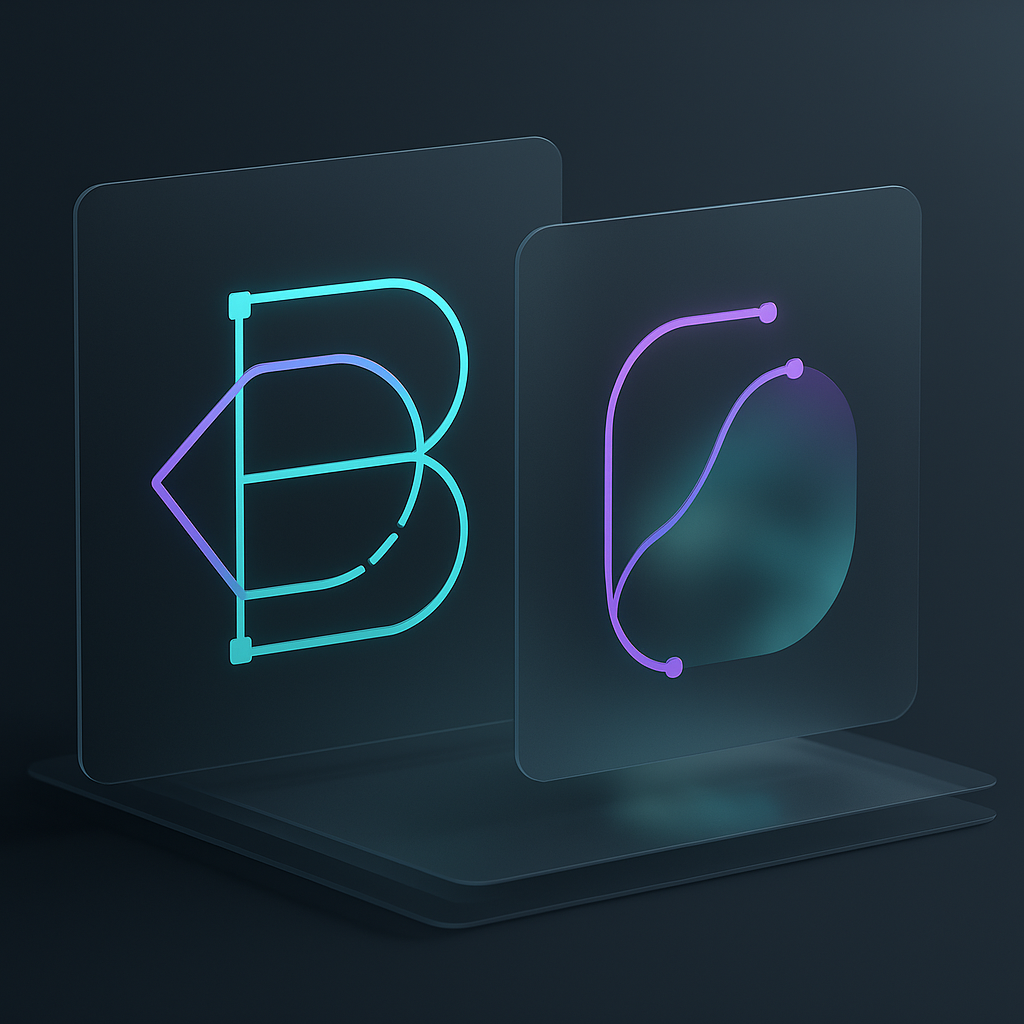
Shape layers and masks in After Effects aren’t rivals so much as they are two different kinds of scissors: one is built to draw and animate clean, infinitely sharp vector artwork (shape layers), and the other is built to cut, reveal, and blend parts of an existing layer for compositing (masks). If you’re deciding which to use, the simplest answer is this: choose shape layers when you want editable vector graphics, motion design controls, and stylized strokes/fills; choose masks when you need to isolate or modify portions of footage, images, text, or precomps-especially when the goal is seamless integration rather than graphic design.
That’s the headline. The rest of the story is where After Effects gets fun: both tools can draw the same-looking path, both can animate that path, and both can be combined in ways that feel like cheating (in the best possible way). Understanding how they differ under the hood-how they render, what they can style, how they interact with effects, and how they impact performance-will make your comps cleaner, faster, and far less likely to spiral into a late-night “why is this edge flickering?” troubleshooting session.
📋 Table of Contents
What are shape layers and masks in After Effects?
At a glance, shape layers and masks can look identical: you grab the Pen tool, click a few points, and you’ve got a path. But After Effects assigns that path to very different systems depending on what’s selected and what you’re trying to do. One system creates a new vector-based layer that can contain multiple groups, fills, strokes, and procedural operators. The other system creates a per-layer cutout (or expansion) that affects how that layer is shown and how it blends with what’s behind it.
It helps to think of a composition as a stage. A shape layer is a performer you bring onto the stage-costume, lighting, choreography, and all. A mask is more like a spotlight or a trapdoor on an existing performer: it changes what the audience can see, but it doesn’t create a new actor.
Defining shape layers
A shape layer is a vector-based layer type in After Effects designed for creating and animating shapes: rectangles, ellipses, stars, custom pen paths, and combinations of all of the above. Because it’s vector, it stays crisp at any scale (within reason-certain effects can rasterize). Shape layers live in their own ecosystem: inside the layer you’ll find Contents, and inside Contents you’ll find groups that can hold paths, fills, strokes, gradients, and a buffet of modifiers like Trim Paths, Repeater, Wiggle Paths, and more.
Shape layers are motion design’s best friend because they’re built for design-first animation. You can animate a stroke drawing on, offset dashes, create multiple copies with Repeater, and control everything with clean, centralized properties. They also play nicely with expressions and can be driven by sliders, audio amplitude, or custom rigs.
One subtle but important point: shape layers can contain multiple shapes inside a single layer. That means you can build a mini-illustration-say, a badge with a circle, text-like lines, and decorative dots-within one layer, then animate the whole thing or animate each group independently.
Browse After Effects animation breakdowns
Defining masks
A mask in After Effects is a path attached to a layer that defines which parts of that layer are visible, hidden, or used for blending operations. Masks can be set to modes such as Add, Subtract, Intersect, Difference, and more. They can also be feathered, expanded/contracted, inverted, and animated over time.
Masks are foundational to compositing. If you’ve ever cut a subject out of a background, isolated a sky to color-grade it separately, created a vignette, or revealed text with a wipe that follows a hand-drawn path, you’ve used masks (or something mask-adjacent like mattes). Masks are also a practical tool for controlling where effects apply-either directly (when effects respect masks) or indirectly (by duplicating layers and masking each copy).
Unlike shape layers, masks don’t inherently have “fill” or “stroke” styling in the same way. They are primarily selection boundaries. You can make them visible as outlines in the interface, but their job is to define an area, not to render a graphic.
How shape layers and masks function in compositions
In a composition, After Effects renders layers from top to bottom. Shape layers render as their own artwork. Masks modify the rendering of the layer they belong to. This distinction matters because it affects everything: blending modes, track mattes, effect order, and whether you can reuse the same path for different purposes.
When you animate a shape layer’s path, you’re animating the geometry of a vector object. When you animate a mask path, you’re animating the boundary of a visibility region on that layer. Both are keyframeable and both can be eased, but they’re evaluated in different parts of the render pipeline.
There’s also a workflow difference that shows up immediately: if you select a layer and draw with the Pen tool, you’ll create a mask on that layer. If you have nothing selected (or you explicitly choose a shape tool set to “Create Shape Layer”), you’ll create a shape layer. That single selection state is responsible for a shocking amount of accidental “why did I make a mask again?” moments-so it’s worth building the habit of glancing at what’s highlighted before you start drawing.
What are the key differences between shape layers and masks?
The differences between shape layers and masks aren’t just philosophical-they’re practical, tactile, and sometimes performance-related. They differ in how you create them, how you edit them, how they interact with effects and transforms, and what they can visually do without extra steps.
It’s tempting to say “shape layers are for motion design, masks are for compositing,” but that’s only the first layer of truth. In real projects, you’ll often use both for the same shot: a shape layer for a graphic overlay, masks for isolating the subject, and then a clever combination to make the overlay feel like it belongs in the scene.
Creation and editing methods
Shape layers are created via the shape tools (Rectangle, Ellipse, Polygon/Star) or the Pen tool when you’re in “shape” mode. They appear as their own layer with a Contents hierarchy. Editing happens primarily through the Path property inside a shape group, and you can add multiple paths and modifiers within the same layer.
Masks are created by drawing on an existing layer (footage, solid, text, shape layer, precomp) with the Pen tool or shape tools in “mask” mode. They appear under the layer as Masks > Mask 1, Mask 2, etc. Editing happens through the mask path and mask settings (feather, opacity, expansion). You can have multiple masks on one layer, and they combine according to their modes and stacking order.
A practical editing difference: shape layers encourage structured design-groups, naming, and reusable components. Masks encourage shot-specific sculpting-quickly drawing boundaries and adjusting feather until it blends. Both can be refined with vertex tools, but shape layers tend to be built and iterated like assets, while masks are often tuned like surgery.
Layer and effect behavior
Shape layers have their own transforms (Position, Scale, Rotation, Opacity) like any layer, but they also have group transforms inside the Contents. This means you can rotate a single shape group within the layer while the layer itself stays put, or scale a stroke pattern independently of the overall layer scale (depending on settings like “Scale Strokes & Fills”). That nested transform stack is a huge advantage for motion design rigs.
Masks, by contrast, are tied to the layer’s coordinate space. They can be set to be “locked” to the layer or moved independently by selecting mask vertices, but they don’t have the same multi-level transform system. If you want a mask to behave like a separate animated object, you often end up animating the mask path itself or using additional layers and track mattes.
Effects complicate the story in interesting ways. Many effects render based on the layer’s pixels; masks can limit what pixels exist (or are visible) to the effect depending on effect order and whether the mask is applied before or after certain operations. Shape layers can be affected by effects too, but since they’re vector-based, you’ll often decide whether to keep them as vectors (for crispness) or rasterize them (for certain effects) via options like Continuous Rasterization (for vector footage) or Collapse Transformations in precomps-concepts adjacent to shape layers but not identical. The point is: shape layers are “born” as graphics; masks are “born” as pixel control.
Visual and stylistic capabilities
This is where shape layers flex. A shape layer can have:
- Multiple fills and strokes per shape group
- Gradient fills and gradient strokes
- Stroke dashes, line caps, joins, and tapering (with additional tools)
- Procedural operators like Trim Paths, Repeater, Round Corners, Offset Paths, Wiggle Paths
- Merge Paths operations (Add, Subtract, Intersect, Exclude) for vector boolean-like behavior
Masks, on the other hand, are visually “invisible” unless you use them as mattes or to create reveals. They don’t have strokes and fills in the design sense. Their visual power comes from how they affect other imagery: isolating, hiding, blending edges, and directing the viewer’s attention.
If you want a visible outline of a mask, you typically convert that concept into a shape layer (copy mask path, paste into a shape path, then add stroke), or you use effects like Stroke on a solid with a mask. That extra step is a clue: masks are not meant to be styled; they’re meant to be used.
What are the advantages and limitations of shape layers versus masks?
Choosing between shape layers and masks is often about choosing which set of compromises you’re willing to live with. Shape layers offer elegance and control, but can become heavy or complex when pushed into compositing tasks they weren’t designed for. Masks are quick and direct for compositing, but can become unwieldy if you try to build elaborate motion graphics systems out of them.
Knowing the advantages and limitations upfront helps you design your workflow so you don’t paint yourself into a corner-especially on long projects where “temporary” solutions have a habit of becoming permanent.
Benefits of shape layers in animation and design
1) Resolution independence and clean scaling. Shape layers are vector-based, so scaling them up for 4K, 8K, or a last-minute “can we punch in?” request is far less stressful than scaling raster artwork. Edges stay crisp, and you can adjust stroke widths and caps to keep the design consistent.
2) Rich styling without extra layers. Need a badge with a gradient fill, a dashed stroke, and a second stroke for a subtle outline? Shape layers can do that inside one layer and one group structure. You can also animate those properties directly-like shifting gradient start/end points or animating dash offset for a marching-ants effect.
3) Procedural animation tools. Trim Paths is practically a rite of passage: it turns a path into an animated draw-on with two sliders. Repeater lets you clone shapes in a way that’s both precise and expressive. Wiggle Paths can turn a sterile line into something organic. These tools are purpose-built for motion design and save you from keyframing dozens of copies manually.
4) Better rigging potential. Shape layers are friendly to expressions and modular setups. You can link multiple properties to a single controller, create responsive designs (like a lower third that adapts to text width), and build reusable animation systems. Masks can be expression-driven too, but shape layers are simply more structured for it.
Limitations of shape layers
1) Complexity can balloon quickly. Because shape layers can hold so much-multiple groups, multiple strokes, multiple operators-they can become dense. A layer named “Shape Layer 27” with five nested groups and unnamed paths is a future headache. The tool is powerful; the discipline is optional (until it isn’t).
2) Not a replacement for true compositing tools. Shape layers can be used as mattes and can interact with blending modes, but they don’t automatically solve problems like hair detail, motion blur integration, or semi-transparent edges in footage. If you’re doing a cutout of a person from a busy background, you’ll likely rely on masks, rotobrush, keying, or matte refinement workflows-not purely shape layers.
3) Certain effects require rasterization or workarounds. Some effects behave differently on vector layers than on raster footage. You may need to precompose, rasterize, or apply effects in a particular order to get the look you want. Shape layers can absolutely be used in VFX-style comps, but they’re not always the most direct tool.
4) Shape operations can be finicky. Merge Paths and boolean-like operations are powerful, but they’re sensitive to group order and hierarchy. A small change in where an operator sits can change the result dramatically. That’s not a flaw so much as a reminder: shape layers are a mini vector engine living inside a compositor.
Strengths of masks for compositing and effects
1) Direct control over visibility. Masks are the fastest way to say, “Only show this part.” Whether you’re hiding a boom mic, isolating a screen for a replacement, or creating a split-screen blend, masks are immediate and predictable.
2) Feathering and edge blending. Mask feather and mask expansion are simple but extremely effective. You can soften edges to integrate elements, create subtle vignettes, or make localized adjustments feel natural. The ability to animate feather and expansion over time is particularly useful when lighting changes or the subject moves closer to camera.
3) Multiple masks per layer with modes. Need to carve holes, intersect regions, or create complex cutouts? Multiple masks with Add/Subtract/Intersect modes let you build a composite matte without creating extra layers. This is especially handy for architectural shapes, UI screens, or anything with negative space.
4) Works on any layer type. Footage, solids, text, precomps, adjustment layers-masks can be applied broadly. That universality makes masks a core “glue” tool in After Effects workflows.
Constraints when using masks
1) Masks are not inherently reusable design assets. A mask is often specific to a shot, a frame, or a layer. You can copy/paste masks between layers, but they don’t carry a design system with them. If you need a consistent graphic element across a project, shape layers (or imported vector assets) are usually a better foundation.
2) Mask-heavy rotoscoping can get messy. If you’re animating mask paths frame-by-frame or with many keyframes, the timeline can become crowded and difficult to revise. You can mitigate this with fewer points, better planning, and sometimes splitting the task into multiple masks, but the limitation remains: manual roto is labor.
3) Styling requires extra steps. Want a visible outline? Want a dashed line? Want a gradient stroke? Masks don’t offer that directly. You can use effects (like Stroke) or convert paths to shapes, but those are additional moving parts.
4) Interaction with effects can surprise you. Depending on the effect and the order of operations, a mask might clip an effect you wanted to extend beyond the masked area (like a glow), or it might not constrain an effect the way you expected. Understanding when to precompose, when to use adjustment layers, and when to use mattes becomes essential as comps grow.
How do shape layers and masks affect performance in After Effects?
Performance in After Effects is rarely about one thing. It’s the combined weight of layer count, resolution, effects, motion blur, 3D, expressions, and-yes-how many paths you’re asking the software to evaluate every frame. Shape layers and masks both use paths, and paths have a cost.
The key is to understand what kind of cost you’re paying. Sometimes shape layers are lighter than you’d expect (especially for clean vector graphics). Sometimes they become heavy (especially with many operators and high point counts). Masks can be cheap for simple cutouts, but expensive when you’re animating complex, high-vertex mattes over long durations.
Rendering speed considerations
Shape layers can render very efficiently when they’re simple: a few paths, a fill, a stroke. But add multiple groups, Merge Paths operations, Repeaters with hundreds of copies, or animated dashes, and you’re asking After Effects to compute a lot of vector geometry per frame. Motion blur can amplify the cost, because it requires additional sampling.
Masks are generally fast when used as straightforward visibility boundaries. However, heavy feathering, many masks on a layer, or masks with a large number of points (especially animated) can slow down previews. If a mask is used to create a matte for effects like blurs or glows, the effect itself may dominate render time, but the mask still contributes.
A practical performance tip: fewer points beats cleverness. Whether it’s a shape path or a mask path, reduce vertex count where possible. Use Bezier curves instead of point-by-point tracing. A smooth curve with four points is easier to compute (and easier to edit) than a jagged outline with forty.
Impact on RAM and CPU usage
After Effects relies heavily on CPU for many operations, though modern versions also use GPU acceleration for specific effects and workflows. Shape layers and masks primarily stress the CPU because they involve path evaluation, rasterization, and effect processing.
RAM usage is influenced by preview resolution, comp duration, and the complexity of frames being cached. A comp with lots of animated masks may cache more slowly because each frame takes longer to compute. Similarly, a comp with shape layers using Repeaters and multiple animated properties may generate frames that are expensive to cache.
If you’re troubleshooting performance, it’s often more productive to isolate the culprit than to blame “shape layers” or “masks” as categories. Solo layers. Disable effects. Toggle motion blur. Precompose sections. Sometimes the real performance hit is a blur effect on a 4K layer-not the mask that defines where the blur applies.
That said, there are common patterns:
- Many animated mask paths (especially with feather) can slow CPU evaluation.
- Shape layers with Repeaters can explode into hundreds or thousands of rendered elements.
- Merge Paths + multiple groups can add overhead due to boolean operations.
- High-resolution comps magnify everything, because every pixel-based effect must process more pixels-even if the source is vector.
When to use shape layers vs masks in your projects
Most real-world After Effects projects aren’t pure motion design or pure compositing. A typical job might include lower thirds (shape layers), screen replacements (masks), cleanup (masks), and animated UI overlays (shape layers), all living together. The best question isn’t “Which is better?” but “Which tool makes this task simpler, cleaner, and easier to revise?”
Below are practical scenarios-less theory, more “what do I pick at 2 a.m. when the client wants changes?”
Situations favoring shape layers
1) Building graphic elements that must stay crisp. Logos, icons, callouts, lower-thirds, charts, badges-anything that should scale cleanly and remain editable benefits from shape layers. If you’re designing for multiple deliverables (1080p today, 4K tomorrow, vertical next week), vector-based shape layers reduce rework.
2) Animations that rely on strokes, trims, and repeaters. If the animation concept includes lines drawing on, circular progress rings, radar sweeps, dotted paths, or kinetic patterns, shape layers are the direct route. Trim Paths alone is often the deciding factor.
3) Modular motion systems. If you want a template-like structure-controllers, reusable comps, consistent styling-shape layers provide the organized property structure to support it. You can name groups, color-code layers, and keep related design elements together.
4) Clean, stylized looks. Flat design, outline animation, minimalist UI, and infographic aesthetics are shape-layer territory. You can art-direct every pixel edge without fighting footage noise or compression artifacts.
Scenarios better suited for masks
1) Isolating parts of footage or images. Need to brighten just the face? Darken just the sky? Hide a logo? That’s masks. They’re the quickest way to localize changes without rebuilding the layer as a graphic.
2) Rotoscoping and shot-specific cutouts. While dedicated tools (like Roto Brush) may be better for complex edges, masks are still essential for many roto tasks-especially when the edge is hard, the subject is geometric, or you only need a partial isolation.
3) Creating reveals and transitions tied to existing layers. Want text to appear as if it’s emerging from behind a wall in footage? You’ll often mask the text layer (or the wall area) to sell the illusion. Masks excel when the reveal is driven by the scene rather than by graphic design.
4) Quick problem-solving. After Effects work often includes little fixes: hiding a seam, limiting an effect, blending two plates. Masks are the duct tape you actually want in your toolkit-precise, adjustable, and easy to animate.
See a real UI widget built in After Effects
Combining shape layers and masks for advanced effects
The most satisfying After Effects setups often use both tools in tandem. Here are a few powerful combinations:
1) Shape layer as a track matte. Create a shape layer with the exact design you want-maybe a rounded rectangle with a stroke-and use it as a matte for footage or texture. This gives you design control (shape layer) while still affecting imagery (matte behavior). It’s a clean way to build stylized windows, picture-in-picture frames, or animated reveals.
2) Masks to localize effects on shape layers. Even though shape layers are graphics, you may want to apply an effect (like a blur or displacement) only to part of the shape. Duplicating the shape layer and masking the duplicate can be faster than trying to engineer a complicated internal shape hierarchy.
3) Copy mask paths into shape paths (and vice versa). A classic move: draw a mask to match an object in footage, then copy the mask path and paste it into a shape layer’s Path. Now you can add a stroke, animate Trim Paths, and create an outline that hugs the subject. This is how you get those stylish “tracked outline” graphics that feel glued to the scene.
4) Shape-driven reveals with mask refinement. You can start with a shape layer for a clean, art-directed reveal, then add masks on top to break perfection-introducing imperfections, overlaps, or occlusions that make the graphic feel physically present in the shot.
What are common workflows and best practices involving shape layers and masks?
After Effects rewards neatness the way a kitchen rewards clean counters: you can still cook in chaos, but you’ll pay for it later. Shape layers and masks both become exponentially easier when you adopt a few habits-naming, grouping, simplifying paths, and designing with revisions in mind.
These workflows aren’t about being precious; they’re about being fast twice: fast to build now, and fast to change later.
Organizing layers for efficient editing
Name things like you’re collaborating with your future self. “Shape Layer 1” becomes “UI_Frame_Main.” “Mask 3” becomes “Mask_Sky_Subtract.” You don’t have to write a novel-just enough that you can search and understand.
Use groups inside shape layers intentionally. If a shape layer contains multiple elements, group them by function: “BG,” “Outline,” “Highlights,” “Dots.” Put modifiers like Trim Paths inside the group they’re meant to affect. This prevents the common issue where a Trim Paths operator accidentally trims everything in the layer because it’s sitting too high in the hierarchy.
Color labels and shy layers. Use label colors to separate design layers from compositing layers. Hide helper layers (like mattes and guides) using the Shy switch. Your timeline becomes readable, and readability is a performance feature for humans.
Precompose with purpose. Precomps can simplify timelines, but they can also create confusion if overused. A good rule: precompose when you need a distinct “module” (like a lower third package) or when you need to control render order/effects in a clean box. Name precomps clearly (e.g., “PRE_UI_Overlay_v03”).
Combining shape layers with masks for complex animations
Workflow example: animated callout that reveals footage inside.
- Create a shape layer with a rounded rectangle and a stroke.
- Animate the rectangle’s size/position for the callout motion.
- Duplicate the shape group (or create a separate shape) to serve as a matte.
- Place footage or a texture layer beneath and use the shape as a track matte to reveal it inside the callout.
- Add a mask on the footage layer to limit secondary effects (like blur) so they don’t spill outside the callout region.
This approach keeps the design controllable (shape layer) while keeping the imagery integration believable (masking and mattes).
Workflow example: outlining a moving object.
- Draw a mask on the footage to match the object’s silhouette (or a simplified version of it).
- Animate the mask path as needed (or use tracking tools where appropriate).
- Copy the mask path.
- Paste it into a new shape layer’s Path property.
- Add a stroke, set line caps/joins, and animate Trim Paths for a draw-on effect.
You end up with an outline that’s easy to style and revise without redoing the roto work. The mask does the “matching,” the shape layer does the “looking good.”
Workflow example: stylized wipes with organic edges.
Use a shape layer for the main wipe (clean geometry, predictable timing), then add a masked texture layer (noise, grunge, ink) to roughen the edge. The wipe stays art-directable, but the final result feels less like a default plugin and more like a designed transition.
Tips to avoid common mistakes
1) Don’t accidentally create masks when you meant to create shapes. Before drawing, check layer selection. If a layer is selected, the Pen tool will usually create a mask on that layer. If you want a shape layer, deselect all layers (click empty space in the timeline) or explicitly set the tool to create shapes.
2) Keep path point counts low. Whether it’s a mask or a shape path, fewer points means easier editing, smoother animation, and better performance. Use Bezier handles. Avoid tracing every pixel edge unless you truly need it.
3) Watch hierarchy in shape layers. Modifiers affect what’s above them in the group. If Trim Paths is trimming the wrong thing, it’s usually sitting in the wrong place. Name groups and keep operators close to the shapes they control.
4) Be mindful of effect order and precomps. If a glow is being clipped by a mask, consider whether you need the glow applied before the masking step (often via precomp) or whether you need to expand the mask or use a different matte strategy. Many “After Effects bugs” are actually render-order misunderstandings.
5) Use masks for integration, shape layers for design. You can absolutely blur that shape layer and mask it and repeat it and merge it and-sure. But when a comp starts feeling brittle, stepping back and reassigning roles helps: shape layers define the graphic language; masks help it sit in the shot.
6) Build revision-friendly controls. For shape layers, consider central controllers (sliders, color controls) on a null or a dedicated control layer. For mask-heavy comps, consider grouping related layers, precomposing a section, and keeping masks named and limited. Your future changes will be faster, and your project will feel less like a Jenga tower.
Conclusion
If shape layers and masks had a shared motto, it would be: the path is not the purpose. The same Bezier curve can either become a beautifully styled vector element or a surgical boundary that makes a composite believable. Once you internalize that difference, you start making choices that are less about habit and more about intent-design intent versus compositing intent.
One of the most useful ways to level up from “I can use both” to “I can art-direct with both” is to develop a small library of path-based tricks you can reach for under pressure: keep a few go-to shape layer rigs (like animated strokes, repeaters, and responsive boxes), and keep a few go-to masking tactics (like subtracting holes, animating feather, and using masks to localize grades). Over time, you’ll notice your comps become not just cleaner, but more expressive-because you’re no longer fighting the tool’s nature.
And if you ever feel stuck, here’s a surprisingly effective question to ask mid-project: Am I trying to make a boundary look like a design, or a design behave like a boundary? The answer usually tells you whether you should be in shape layer land, mask land, or-most often-the sweet spot where both work together and the shot quietly clicks into place.