
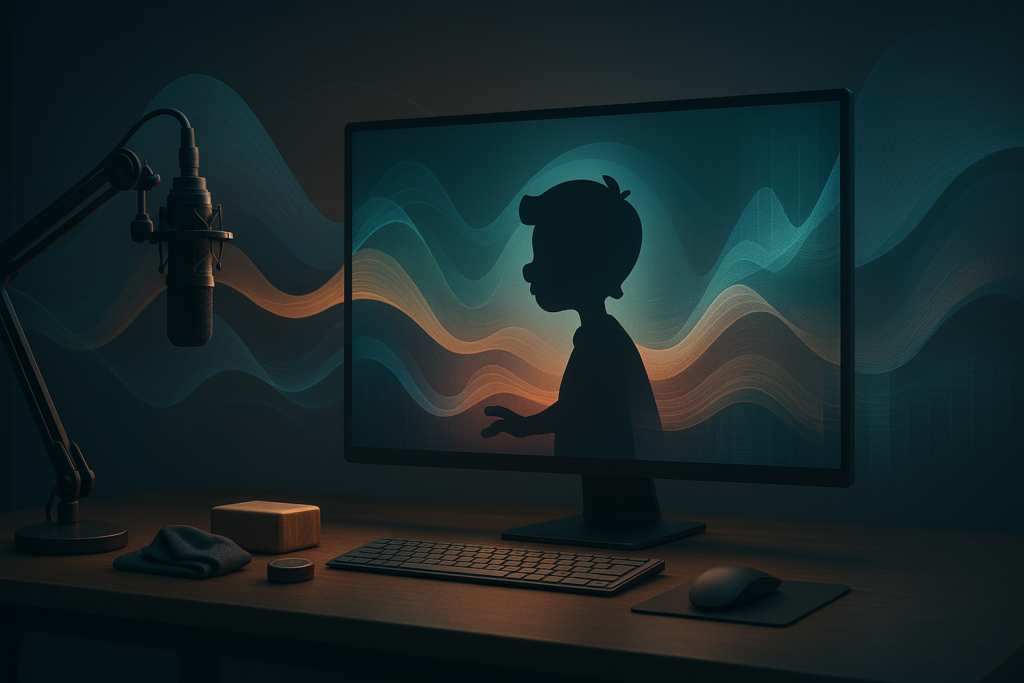
Sound design for animation is the craft of creating, choosing, shaping, and mixing every audible element-dialogue, effects, foley, ambience, and music-so that animated images feel alive, emotionally legible, and physically believable. In practice, it’s less about “adding sound” and more about inventing a world the audience can hear, then syncing that world to timing that may be elastic, stylized, or downright impossible in real life. Because animation isn’t bound by microphones on set, sound becomes the bridge between drawings or pixels and the viewer’s nervous system: it tells us what has weight, what has intention, what is funny, what is scary, and what matters.
Even though the title is Polish, the challenge is universal: how do you design sound for something that never truly existed? The answer is: you treat sound as a narrative department, not a technical afterthought. You build sonic rules, you exaggerate with taste, you leave space for performance, and you mix with clarity. By the end of the process, the best compliment is not “nice sound,” but “I forgot it was animated.”
Watch animation projects with polished sound & motion
📋 Table of Contents
What is sound design for animation?
Definition and role in animation
Sound design for animation is the intentional construction of an animated project’s entire sonic identity. It includes the obvious-like footsteps, explosions, and dialogue-but also the subtle: the air in a room, the tonal “glue” that makes a cut feel smooth, the tiny squeak that turns a neutral gesture into a comedic beat.
In live-action, sound often begins as documentation: production audio captures voices and some of the environment. Animation begins in silence. That silence is both a problem and a gift. It’s a problem because you must create everything from scratch. It’s a gift because you’re not stuck with the limitations of a location, a noisy street, or a microphone placed too far away. You can design the sonic world to be exactly as expressive as the visuals.
The role of sound in animation is therefore foundational. It anchors physics (“that rock is heavy”), clarifies action (“the character grabbed this object”), and guides attention (“listen here; this is important”). It also provides continuity: when animation style shifts, when edits are fast, or when the camera does impossible moves, sound can be the thread that keeps the audience oriented.
Sound design also has a social role in the production pipeline. Because it touches story, rhythm, performance, and tone, it becomes a conversation between departments: directors, animators, editors, composers, and voice actors. A sound designer is often part engineer, part storyteller, and part diplomat-translating creative intent into a mix that survives different speakers, platforms, and viewing environments.
Key elements of sound design in animation
Animation sound design is typically built from several interlocking elements. Each one has its own job, but the magic happens when they cooperate rather than compete. Think of it like an orchestra: a violin can be beautiful, but if it plays over every other instrument, the piece collapses into noise.
At a high level, the key elements include:
- Dialogue and voice performance (including ADR and voiceover narration)
- Sound effects (designed or sourced impacts, whooshes, creature sounds, UI beeps, magical elements)
- Foley (performed, character-driven details like cloth movement, footsteps, prop handling)
- Music (score and/or licensed tracks)
- Ambience (environment beds, room tone, wind, city wash, interior hums)
- Mixing and dynamics (how all of the above are balanced over time)
Two additional “invisible” elements deserve mention because they often determine whether an animated soundtrack feels professional:
- Timing: the micro-choices of when a sound starts, peaks, and ends-especially around animation poses and cuts.
- Tone: the consistent aesthetic rule-set (realistic, cartoony, surreal, minimalist, hyper-detailed) that prevents the soundtrack from feeling like a random collage.
When these elements are aligned, sound doesn’t merely accompany animation-it animates the animation. A blink can become a joke. A pause can become dread. A simple walk cycle can become a personality.
Why is sound design important in animation?
Enhancing story and emotional impact
Animation is often visually expressive by design: colors, shapes, and motion carry meaning. But emotion is not only seen; it’s heard. Sound design can intensify feelings by controlling expectation and release-tension and relief-through rhythm, texture, and silence.
Consider how a scene changes when you alter only the sound. A character walking down a hallway can be comedic with bouncy footsteps and a squeaky belt, ominous with a distant low rumble and sparse reverb, or intimate with close-miked cloth and a gentle room tone. The drawings haven’t changed. The story beat has.
Sound also helps with narrative clarity. Animation can be stylized, and stylization sometimes reduces literal detail. If the visuals simplify a complex action, sound can restore understanding: a quick series of clicks and a satisfying lock “clunk” tells us a device is armed; a brittle crack and a tiny rattle tells us something broke even if the object is off-screen.
And then there’s the emotional shortcut: music and sound design can access the audience faster than dialogue. A single trembling breath, a widening reverb tail, or the sudden absence of ambience can communicate fear, awe, loneliness, or wonder before a character speaks.
Creating immersive experiences
Immersion is often mistaken for “lots of sound.” In reality, immersion is coherence: the sense that the sonic world follows rules and reacts to events. Animation, because it can bend reality, requires sound to establish what “reality” means in that particular film.
Immersion comes from detail, but also from restraint. A richly layered ambience can make a background feel alive, yet too much detail can distract from the foreground action. A well-designed soundtrack uses depth: foreground sounds are crisp and intentional, midground elements support, and background beds provide a stable floor.
Spatial cues matter as well. Even in stereo, careful use of panning, level, and reverb can suggest distance and environment size. In surround or immersive formats, sound can guide attention like a flashlight. For animation-where camera movement can be extreme-sound can make those moves feel physically navigable rather than visually chaotic.
Finally, immersion is psychological. Sound can imply off-screen space: the neighbor’s TV through a wall, a train far away, insects outside a window. Those hints expand the world beyond the frame, making the animation feel like a slice of a larger, continuous universe.
Supporting character and scene development
Characters in animation are often designed with iconic silhouettes and stylized motion. Sound can give them texture-sometimes literally. The creak of a wooden robot, the soft thud of a plush creature, the subtle jingle of jewelry: these details tell us who a character is before they speak.
Sound can also evolve with character development. A timid character might have quieter, lighter footsteps and more “air” in their voice; as they gain confidence, the same footsteps might become firmer, and the mix might allow more low-end presence. This isn’t about gimmicks. It’s about using sonic language to mirror internal change.
Scenes, too, benefit from sonic identity. A kitchen might be warm and close, with gentle appliance hum and intimate reverb; a villain’s lair might have metallic reflections, distant drones, and a sense of scale. When each location has a distinct sonic fingerprint, the audience navigates the story more easily, even during rapid cuts.
What are the main components of sound design in animation?
Dialogue and voiceovers
Dialogue is the most cognitively demanding element in a mix because the audience actively decodes language. If dialogue is unclear, everything else becomes irrelevant-people will strain, get tired, and disengage. For animation, dialogue is often recorded in controlled studio environments, which is a blessing, but it creates its own challenges: studio-clean voices can feel detached from the animated world.
To integrate dialogue, sound designers and mixers commonly use:
- EQ to remove muddiness and shape presence
- Compression to stabilize performance dynamics without making it lifeless
- De-essing to control harsh sibilance, especially in bright mixes
- Reverb and early reflections to place voices in a space (subtly-too much and it sounds “dubbed”)
- Perspective shifts (close vs. distant voice tone) to match camera distance
Voiceovers-narration, inner monologue, or stylized commentary-have a slightly different job. They often sit “above” the world, acting as a guide. That means they may be cleaner, drier, and more centered than in-world dialogue. But they still need emotional integration; a voiceover that feels pasted on can break the spell.
In animation pipelines, dialogue is also a timing driver. Animators may animate to scratch tracks, then refine to final performances. That makes dialogue not only a sonic element but a structural one: it shapes pacing, facial animation, and comedic timing.
Sound effects
Sound effects (SFX) in animation range from realistic to wildly exaggerated. They include impacts, whooshes, magical zaps, creature vocalizations, mechanical movements, UI sounds, and transitions. Unlike foley, which is often performed to picture, SFX can be designed more abstractly-built from synthesis, processing, and layered recordings.
A useful way to think about SFX in animation is to categorize them by narrative function:
- Action-confirming: tells the viewer what happened (a punch lands, a door locks)
- Motion-enhancing: emphasizes speed, direction, and energy (whooshes, swishes)
- World-defining: establishes technology level, genre, and style (retro sci-fi beeps vs. organic fantasy chimes)
- Emotional-coloring: adds humor, tension, or tenderness (a tiny squeak that makes a character endearing)
Because animation can break physics, SFX often carry the responsibility of making impossible actions feel “right.” If a character stretches like rubber, the sound might include elastic creaks and pitch bends. If a spaceship turns on a dime, the sound might add a stylized whoosh that sells the move, even if it’s not realistic.
Good SFX design is rarely about the fanciest plugin. It’s about choosing a sonic metaphor the audience understands instantly, then executing it cleanly. The audience should feel the idea, not notice the technique.
Foley sounds
Foley is the performed, human-scale layer of sound: footsteps, cloth, hand interactions with props, body movement, and small object handling. In animation, foley is a secret weapon because it provides tactile realism. Even in a cartoony world, foley can make characters feel like they occupy space and have mass.
Foley also carries performance. Two characters can walk with identical animated cycles, yet sound entirely different: one might shuffle nervously; another might stride with confidence. Foley artists can “act” with sound-timing heel-to-toe, adding hesitation, changing texture as a character steps from carpet to tile.
Animation sometimes demands foley that doesn’t exist in real life. What does a gelatin creature sound like when it sits down? Foley invites playful experimentation: wet chamois cloth, cornstarch in a leather pouch, rubber gloves, celery snaps, coconut shells-classic tools become new languages when you process and layer them.
Because foley is detailed, it must be curated. Not every movement needs a sound. The best foley tracks pick moments that support story beats and leave breathing room for dialogue and music.
Music scores
Music is the emotional architecture of many animated films and series. It can provide momentum, unify scenes, and elevate simple visuals into something mythic. But music can also over-explain. When the score tells the audience exactly what to feel at all times, it can flatten nuance.
In animation, music often interacts closely with timing. “Mickey Mousing”-synchronizing musical hits to actions-can be delightful in comedy and classic cartoon styles, but it can also become exhausting if used constantly. A modern approach often blends occasional tight sync points with broader thematic writing that supports the arc rather than every gesture.
Sound design and music should be planned as collaborators, not rivals. A dense orchestral cue leaves less room for intricate SFX; a minimal score can invite richer sound design. Many productions benefit from early conversations between composer and sound team about frequency space, key motifs, and where silence will do more than melody.
When budgets are limited, smart musical choices matter even more. A small set of well-developed themes, used with intention, can outperform a wall-to-wall score. Likewise, a single strong sonic motif-like a signature instrument or texture-can become part of the film’s identity.
Ambience and background sounds
Ambience is the bed that makes scenes feel continuous. It includes environmental soundscapes (forest insects, city traffic), interior tones (HVAC hum, fluorescent buzz), and subtle movement (wind through gaps, distant machinery). In animation, ambience is often the difference between “characters floating in a void” and “characters living somewhere.”
Ambience also supports transitions. When you cut from one location to another, the ear needs a cue. A well-crafted ambience shift can make the edit feel natural even if the visuals are stylized. Conversely, if ambience is inconsistent-too loud in one shot, missing in the next-the audience feels the seams.
Background sounds can also carry storytelling details: a distant siren that hints at danger, a muffled party that suggests exclusion, a ticking clock that makes a pause feel longer. These elements should be used like seasoning: enough to enrich, not so much that it overwhelms the dish.
How is sound designed for different types of animation?
2D animation sound design considerations
2D animation often leans into stylization: simplified forms, expressive timing, and exaggerated motion. Sound design can either match that style (cartoony, punchy, bright) or contrast it (realistic, grounded) depending on the intended tone. The key is consistency-once you establish the sonic language, the audience will follow.
Timing in 2D can be snappy, with holds and sudden changes in pose. These “pose-to-pose” moments are opportunities for sound accents: a quick cloth snap, a tiny squeak, a comedic pop. But the accents must be chosen carefully; if every pose has a sound, the track becomes a percussion solo that never ends.
Many 2D projects benefit from a slightly heightened foley approach. Footsteps may be more pronounced, prop handling more “readable,” and transitions more stylized. In dialogue-heavy 2D series, clarity is king: keep the midrange clean, avoid masking consonants, and design effects that live around the voice rather than on top of it.
Because 2D backgrounds can be painterly or minimal, ambience often needs to do extra work. A sparse visual environment can still feel rich if the soundscape suggests depth: distant birds, subtle wind layers, or room tone that implies walls and space.
3D animation sound design techniques
3D animation frequently aims for a stronger sense of physicality-objects have volume, lighting suggests real materials, and camera moves can mimic live-action cinematography. Sound design can reinforce that by paying attention to material cues: wood vs. metal, glass vs. plastic, soft fabric vs. leather. Tiny details-like the resonance of a hollow object-make the world feel tangible.
3D also often includes complex action sequences and dynamic camera movement. Here, perspective is crucial. As the camera swoops closer, sounds can become more detailed and brighter; as it pulls away, they can lose high frequencies and gain reverb. Even in stereo, these perspective shifts help the audience “feel” the camera motion.
Creature and character vocal design is another common 3D requirement. Many 3D films include non-human characters that still need emotional readability. Designers often layer animal recordings, human vocalizations, and synthetic textures, then shape them with pitch, formant shifting, and dynamics. The goal is not realism-it’s believability within the film’s rules.
Finally, 3D projects often have higher expectations for polish. That means clean edits, consistent noise floors, smooth transitions, and mixes that translate across theatrical, TV, and mobile playback. Technical discipline becomes part of the creative result.
Stop-motion animation sound design challenges
Stop-motion has a tactile, handmade charm: you can sense the fingerprints in the craft. Sound design can amplify that tactility-or accidentally fight it. One challenge is that stop-motion movement can be slightly staccato, with micro-jerks that are part of its aesthetic. If you design ultra-smooth, hyper-realistic sound, it may feel disconnected.
Another challenge is scale. Stop-motion sets are often miniature, but the story may treat them as full-size worlds. Sound must decide: do we hear the miniature reality (tiny, close, delicate) or the story reality (full-bodied, cinematic)? Many successful stop-motion soundtracks blend both: intimate foley details with larger-than-life impacts when the narrative demands it.
Because stop-motion lighting and textures are so rich, sound can afford to be slightly more restrained. Let the visuals breathe. Use silence and subtle ambience to highlight the handcrafted feel, then punctuate key actions with carefully chosen accents.
Stop-motion also benefits from bespoke foley. Performing prop sounds that match the materials used in puppets and sets-fabric seams, wooden joints, clay surfaces-can create a satisfying unity between what we see and what we hear.
What tools and software are used in sound design for animation?
Digital audio workstations (DAWs)
A DAW is the sound designer’s main workspace: where audio is edited, arranged, processed, and mixed to picture. The “best” DAW is often the one that fits your workflow and the project’s needs. For animation, the essentials are strong video support, reliable synchronization, flexible routing, and efficient editing tools.
Common DAWs used in professional and indie pipelines include:
- Avid Pro Tools (industry standard in post-production, excellent for editing and mixing workflows)
- Reaper (highly customizable, cost-effective, powerful for complex routing)
- Adobe Audition (strong for dialogue editing and integration with Adobe workflows)
- Logic Pro and Cubase (often used in music-heavy workflows, also capable for post with the right setup)
- Nuendo (post-focused features, strong for game audio and surround workflows)
Beyond the DAW, sound designers rely on plugin ecosystems: EQs, compressors, reverbs, distortion, pitch tools, transient shapers, and restoration tools. The point isn’t to collect plugins like souvenirs; it’s to know a small set deeply and use them with intention.
For animation, video playback stability is non-negotiable. Dropped frames, drifting sync, or inconsistent timecode can turn a creative session into a troubleshooting marathon. A good workflow includes locked picture versions, clear naming conventions, and change logs when edits arrive.
Sound libraries and sample packs
Sound libraries are the pantry of post-production. They can save time, inspire ideas, and provide high-quality recordings that would be expensive or impossible to capture yourself. Libraries range from general-purpose collections (doors, vehicles, nature) to niche packs (specific weapons, retro electronics, sci-fi textures).
However, relying on libraries without customization can make a soundtrack feel generic. The most effective approach is often “library plus”: start with a good source, then shape it-layer it with your own recordings, change pitch and timing, add transient detail, and place it in a space with reverb and perspective.
When using libraries, pay attention to licensing. Animation often lives on multiple platforms-festival, streaming, broadcast, social media-and usage rights can vary. Keeping documentation of where sounds came from and what licenses apply is boring in the way seatbelts are boring: it matters most when something goes wrong.
Sample packs for music production can also be useful for stylized animation, especially for UI sounds, rhythmic elements, and design textures. But again, the goal is not to sound like the pack; it’s to make it sound like your world.
Recording and editing equipment
Even with great libraries, original recording is a superpower. It gives you unique textures and helps your work stand out. You don’t need a Hollywood studio to start, but you do need a reliable chain and good habits.
A practical starter-to-pro recording toolkit might include:
- Microphones: a shotgun mic for focused recording, a large-diaphragm condenser for studio detail, and a dynamic mic for loud sources
- Portable recorder: for field recording and quick capture of spontaneous ideas
- Audio interface: clean preamps and stable drivers for studio work
- Headphones: closed-back for recording, open-back for editing/mixing checks
- Pop filter, stands, shock mounts: small tools that prevent big problems
Editing equipment is equally important: accurate monitoring and a treated listening environment. Many sound issues aren’t “in the sound”-they’re in the room you’re listening in. Even basic acoustic treatment can improve decision-making dramatically.
Finally, organization tools matter. A sound designer’s real instrument is often the file system: naming, metadata, and searchable databases. If you can’t find your best sounds quickly, you’ll reuse the second-best ones out of frustration.
How to create effective soundscapes for animation?
Matching sounds to visuals
Matching sound to visuals in animation is not a literal exercise; it’s an interpretive one. The question isn’t “What does this object sound like in real life?” but “What should the audience feel when this happens?” A tiny character lifting a huge object might need an exaggerated strain sound, a low-end groan, and a comedic squeak-because the story beat is effort plus humor.
Start by reading the image. Look for:
- Material cues: metal, wood, cloth, glass, liquid
- Motion type: smooth glide, jittery stop-motion, fast snap, slow weight shift
- Scale: miniature, human, gigantic
- Style: realistic, cartoony, surreal, minimalist
Then decide on a sonic approach. In many cases, the best match is a hybrid: a realistic core layered with stylized accents. For example, a sword swing might have a real metal “shing” plus a designed whoosh that communicates speed beyond realism.
Sync is more than alignment. A sound can lead the visual slightly to create anticipation, or lag slightly to emphasize impact. Comedy often benefits from crisp, slightly early accents; heavy impacts sometimes feel better with a tiny delay, letting the eye register contact before the ear confirms it.
See a polished UI animation case study
Using layering and mixing techniques
Layering is the heart of modern sound design. One sound rarely does everything. A convincing impact might include:
- Transient layer: the initial “hit” (sharp, short)
- Body layer: the weight and resonance (mid/low, longer)
- Texture layer: grit, debris, or material detail (sand, splinters, cloth)
- Sweetener: stylized accent (cartoon pop, sub drop, sparkle)
Mixing techniques help those layers behave. EQ carves space so layers don’t mask each other. Compression can glue layers, but over-compression can flatten dynamics-especially harmful in animation, where dynamic contrast often sells energy.
Reverb is not just “make it roomy.” It’s a storytelling tool. A short, tight room reverb can make a scene feel intimate; a long hall reverb can make a character feel small. Early reflections can place sounds in space without washing out clarity.
Automation is where the mix becomes alive. Rather than setting one level for an effect, automate it to follow the scene: louder at the moment of attention, softer when dialogue enters, slightly wider in a montage, narrower in a tense whisper scene.
Balancing sound elements for clarity
Clarity is the difference between a professional mix and a messy one. In animation, clarity is especially important because sound often carries information the visuals imply but don’t fully show. If the soundtrack is cluttered, the audience misses story beats.
A practical hierarchy often looks like this:
- Dialogue (when present) is usually the priority.
- Story-critical effects (key actions, reveals, transitions) come next.
- Music supports emotion and pacing without masking speech.
- Ambience and detail provide depth but stay out of the way.
To maintain clarity, use frequency management. Dialogue lives heavily in the midrange; if your effects and music pile into the same band, intelligibility suffers. Sidechain compression can gently duck music under dialogue, but it should be subtle-like moving aside to let someone pass, not shoving them out of the room.
Also consider “negative space.” Silence, or near-silence, can be powerful. Removing ambience for a beat can make a character’s realization land harder than adding another dramatic whoosh ever could.
What are common challenges in sound design for animation?
Synchronizing sound with animation timing
Animation timing can change late in production. Shots get trimmed, frames get added, lip-sync gets refined, and suddenly your carefully synced effects drift out of place. This is normal-and it’s why sound designers develop workflows that anticipate change.
Strategies for surviving timing shifts include:
- Work to timecode and versioned picture with clear naming (e.g., “Scene_12_v07”).
- Keep sessions organized by stems (DX, FX, Foley, BG, MX) and by scene.
- Use markers for key sync points (hits, blinks, cuts).
- Build modular effects that can be re-timed (separate transient/body/tail layers).
There’s also the creative challenge of micro-sync: aligning sound to poses, arcs, and anticipation frames. A punch often feels best when the “whoosh” aligns with the wind-up and the impact lands on the contact frame. But sometimes the funniest version is wrong on paper: a slightly delayed impact can make a hit feel heavier or more absurd. Sync is a tool, not a law.
Finally, watch out for frame rate mismatches. Working at 23.976 vs. 24 fps, or delivering for 25 fps broadcast, can cause drift if not handled carefully. Confirm technical specs early, and test exports before you’re in a deadline panic.
Avoiding sound clutter
Animation invites detail. Every blink, gesture, and prop can “want” a sound. The danger is turning the soundtrack into an over-explained audiobook of effects. Clutter reduces impact: if everything is emphasized, nothing feels important.
To avoid clutter, design with intention:
- Choose hero moments: pick the actions that deserve sonic spotlight.
- Use motifs: repeating a signature sound for a character or object can reduce the need for constant novelty.
- Vary density: busy scenes can be followed by sparse scenes to reset the ear.
- Let music carry when appropriate, and let sound design carry when music steps back.
Clutter is not only about the number of sounds; it’s about frequency overlap and dynamic range. Ten quiet, well-separated sounds can feel clean. Three loud midrange-heavy sounds can feel like a traffic jam.
A helpful habit is to mute tracks periodically and ask: “Does the story still read?” If muting a layer changes nothing, it may be decoration rather than storytelling. Decoration can be fine-but it should earn its place.
Maintaining sound consistency
Consistency is what makes a soundtrack feel like a single world rather than a playlist of unrelated clips. In animation, where scenes may be produced out of order and revised frequently, maintaining consistency is an ongoing challenge.
Consistency has several dimensions:
- Character consistency: a character’s footsteps, vocal textures, and signature sounds should feel stable unless there’s a story reason to change.
- Location consistency: each environment should have a coherent ambience and reverb identity.
- Style consistency: the level of exaggeration should match the project’s tone.
One practical solution is to build a “sound bible”: a simple document or folder structure that includes signature sounds, notes on processing chains, and references. Another is to create reusable templates and track presets, so new scenes begin with the same routing and basic tonal assumptions.
Consistency doesn’t mean sameness. The soundtrack should evolve with the story. The trick is to evolve intentionally, not accidentally-so the audience feels progression, not inconsistency.
What skills are required for sound designers working on animation?
Technical audio skills
Sound design is art built on engineering. You don’t need to be obsessed with specifications, but you do need competence: clean edits, noise control, proper gain staging, and mixes that translate.
Core technical skills include:
- Editing: tight cuts, crossfades, timing, and clip gain
- Processing: EQ, compression, saturation, pitch/time manipulation
- Restoration: removing clicks, hum, and unwanted noise without damaging performance
- Mixing: balancing elements, automation, bussing, stem management
- Delivery: exporting stems, meeting loudness targets, conforming to specs
For animation specifically, video sync and session organization are technical essentials. If you can’t keep up with picture changes, your creative ideas won’t reach the finish line.
It also helps to understand basic acoustics and monitoring. Many beginner mistakes come from mixing in untreated rooms and overcompensating-too much bass, too much treble, or dialogue that sounds fine on headphones but disappears on speakers.
Creative and storytelling abilities
Technical skill gets you clean sound. Storytelling skill gets you meaningful sound. Animation thrives on intention: every sound can imply character, genre, and emotion.
Creative sound designers develop:
- Interpretation: translating visuals into sonic metaphors
- Rhythm: understanding pacing, comedic timing, and dramatic beats
- Taste: knowing when to exaggerate and when to hold back
- Curiosity: experimenting with unusual sources and playful techniques
They also learn to love revision. A sound idea that felt brilliant yesterday may feel too much today when the scene’s emotion shifts. Flexibility is not a compromise; it’s part of the craft.
One underrated storytelling tool is silence. Knowing when to remove sound-when to let a character’s expression land without commentary-can be more powerful than any designed effect.
Collaboration and communication
Animation is collaborative by nature. Sound designers must communicate with directors about tone, with editors about timing, with animators about performance beats, and with composers about space in the mix.
Good collaboration includes asking specific questions:
- Is this world grounded or heightened?
- Do we want comedy accents or subtle realism?
- What should the audience focus on in this moment?
- Are there signature sounds for characters or objects?
It also includes presenting work effectively. Instead of sending a pile of files, provide clear versions: “Option A (more cartoony), Option B (more realistic).” Give the director choices that map to creative intent, not technical jargon.
Finally, collaboration means respecting constraints: deadlines, budgets, and late picture changes. A professional sound designer can be both creative and reliable-two qualities that, together, make you invaluable.
How to start a career in sound design for animation?
Educational pathways and courses
There’s no single doorway into animation sound design. Some people come from music production, others from film post, others from game audio, and some from pure curiosity plus stubborn practice. Education can help, but it’s not only about diplomas; it’s about building a skill stack and a body of work.
Possible learning paths include:
- Film/audio post programs that teach dialogue editing, foley, mixing, and delivery workflows
- Music production courses that strengthen arrangement, mixing, and critical listening
- Online courses focused on sound design, synthesis, and post-production techniques
- Self-directed projects (often the fastest way to learn animation-specific timing)
Because animation is timing-sensitive, it’s useful to practice to picture early. Download public domain clips or create your own simple animations, then design full soundtracks. You’ll learn quickly where your instincts are strong and where your workflow needs structure.
Also study references. Watch animated scenes with your eyes closed and analyze what the soundtrack is doing: where it’s dense, where it’s quiet, how it supports performance, how it transitions between locations. This kind of listening is free-and it’s one of the best teachers.
Building a portfolio
A portfolio for animation sound design should show more than technical ability; it should show taste, storytelling, and range. A strong reel is short, curated, and clear about what you did.
Practical portfolio pieces include:
- Re-sound designs: take an existing animation clip, mute it, and create a new soundtrack (note: don’t claim original credit-label it as a redesign)
- Original shorts: collaborate with student animators or indie creators
- Character sound tests: short clips focusing on a single character’s movement and personality
- Before/after breakdowns: show layers (FX, foley, BG, MX) to demonstrate craft
Keep the reel moving. If the best moment is at the end, put it near the beginning. Busy producers and directors decide quickly. Make their decision easy.
Include notes on your role: sound design, foley, dialogue edit, mix, music (if applicable). Clarity builds trust. And if you used libraries, that’s fine-most professionals do. The question is whether you made the material your own through selection, timing, and integration.
Watch a full animation breakdown for inspiration
Networking and industry opportunities
Animation is a community-driven industry. Many opportunities come from relationships: classmates, collaborators, festival contacts, online communities, and referrals. Networking doesn’t have to be performative. It can be as simple as consistently doing good work, being pleasant to collaborate with, and staying visible.
Ways to find opportunities:
- Collaborate with animators on short films, especially in student and indie circles
- Join online forums and communities focused on animation and audio post
- Attend festivals and screenings where shorts are shown-many teams are actively looking for sound help
- Reach out thoughtfully to studios or freelancers with a concise reel and a specific reason you’re contacting them
When you reach out, make it easy for people to respond. A short message, a link to a reel, and a sentence about what kind of projects you’re seeking is more effective than a long autobiography. Respect time, and you’ll be respected back.
Also consider adjacent industries. Game audio, motion graphics, and interactive media share many sound design skills with animation. Work in these areas can build your portfolio, your network, and your confidence-while keeping you paid and practiced.
Conclusion
One of the most exciting things about sound design for animation in 2026 is how accessible experimentation has become. Portable recorders are better and cheaper, DAWs are powerful on modest laptops, and collaboration can happen across continents without anyone pretending time zones are a myth. That means the creative edge has shifted: it’s less about who owns the fanciest gear and more about who has the clearest taste, the sharpest timing instincts, and the courage to make specific choices.
If you want a final practical takeaway, make it this: build a tiny “sonic rulebook” for every project you touch. Decide how exaggerated the world is, how close the audience feels to characters, and what sonic motifs belong to whom. Then break your own rules only when the story earns it. That’s where animation sound becomes unforgettable-not because it’s loud or complex, but because it feels like it was always meant to exist alongside the images, like the other half of a single imagination.
And if you ever doubt whether sound matters, try the simplest experiment: take a short animated scene, mute it, and watch. Then add only three sounds-one for the environment, one for a character’s movement, and one for a key action. If those three choices are well-timed and emotionally honest, the scene will suddenly feel inhabited. That moment-when silence turns into a world-is the real reason people fall in love with projektowanie dźwięku do animacji.